Helping Children Do Well: A Collaborative Approach to Challenging Behaviors
So often, when we get really upset with our children, the first thing we want to do is solve the problem. Tell them what needs to happen. Take control. Sometimes even become a bit dictatorial!
In those times of frustration or anger, our rational thinking tends to take a back seat to our emotions. We forget what might be happening in our children's internal life. We rush ahead instead of taking the time to help guide them.
Yet our children look to us for assistance and support. When children are struggling, they need us to show compassion, patience, and empathy.
Changing Our Perspective
Dr. Ross Greene, a clinical psychologist and author of Raising Human Beings, among other publications, makes an impassioned plea through his work asking adults to recast how we think about challenging behavior. When children are behaving in challenging ways, Dr. Greene explains, it is because they are lacking the skills not to be challenging. If they had the skills, they would not be challenging.
Dr. Greene also emphasizes two vital themes to better support our children: "Kids do well if they can," and, "Doing well is always preferable to not doing well."
If we wholeheartedly embrace the fact that our children want to do well if they can, we take a dramatic departure from the view of challenging kids as attention-seeking, manipulative, coercive, or poorly motivated. It is a completely different set of lenses, supported by research in the neurosciences over the past 30 to 40 years, and it has dramatic implications for how caregivers go about helping children.
At Northwood Montessori School, this mindset aligns deeply with how we respect the child in our Toddler and Primary environments. We see every behavior as a form of communication.
How Can We Help?
It is worth noting that all children at some point demonstrate challenging behaviors. So how do we, as adults and caregivers, help children with these challenges?
The first step is to think about what difficulty a child is facing. The challenging behavior arises because of an underlying difficulty. Listing specific difficulties helps us shift our thinking away from the behaviors that cause us frustration.
Next, at a time when the behavior is not happening, we can find a quiet moment to connect. At that point, we can state what we have observed without judgment: "I have noticed it has been difficult to finish breakfast before we need to leave for school."
The Empathy Step
Then, and this is key, we ask: "What's going on?" or "How are you feeling about that?"
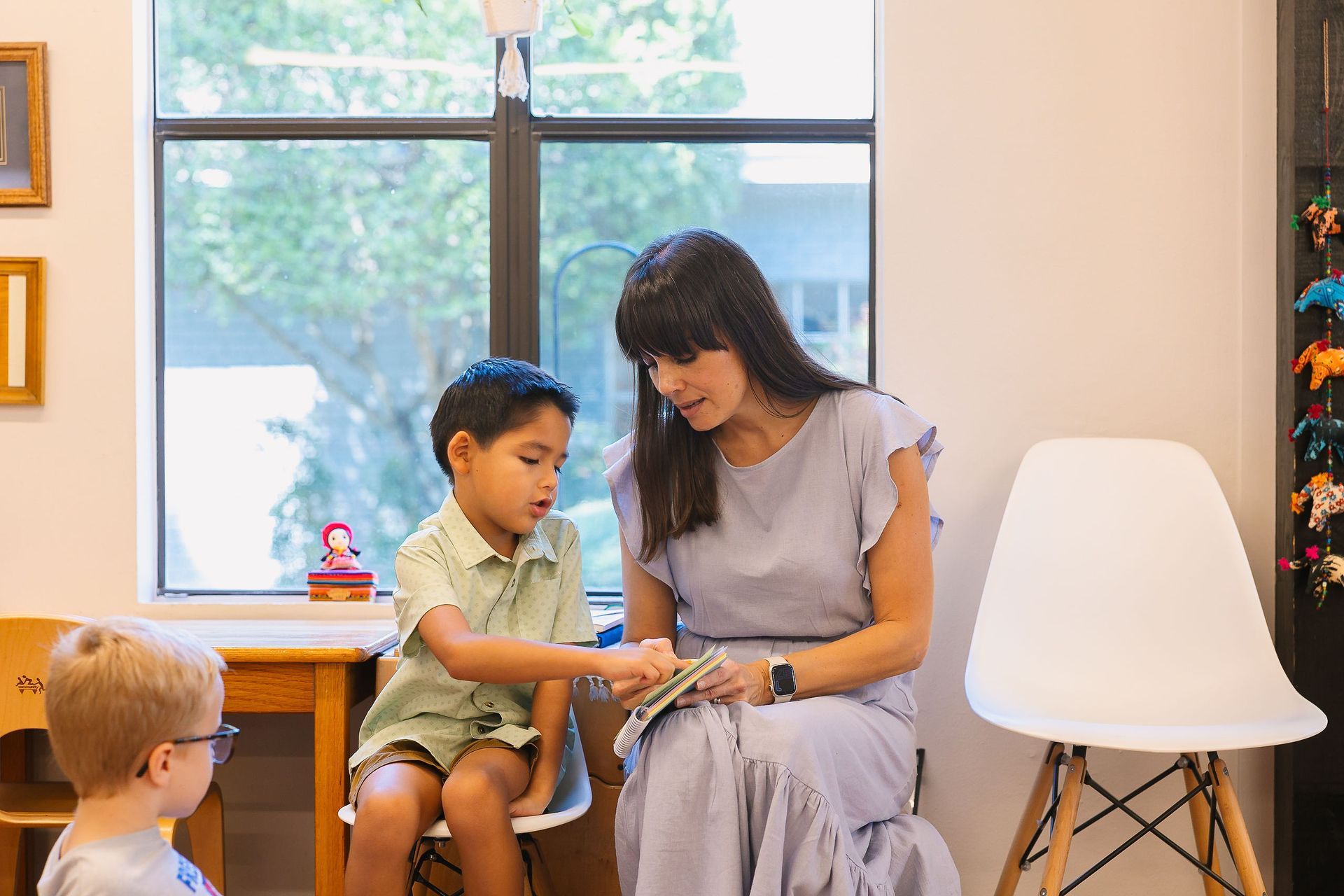
This statement of a non-judgmental observation, followed by an invitation to share, initiates what Dr. Greene calls the Empathy Step. The Empathy Step is an information-gathering process in which we try to understand the child's perspective and experience. We listen without reacting, asking questions or reflecting back answers in order to understand what is happening for the child in those moments of challenge.
During this time of reflective listening, it is essential that our child feels truly heard. All too often, adults jump in too quickly with advice or solutions without giving enough time and space for the child to share their perspective.
Assuming our child has been able to share what is going on, we summarize their feelings and share our own perspective. For example: "I understand, and my concern is that I feel stressed when we are rushing to get out the door in the morning." We then invite our child to work together with us to find a solution that meets everyone's needs.
Being Heard and Validated
When using this process with children, we sometimes do not even need to reach the final step of collaborative problem solving immediately. Sometimes it makes sense to listen to what our child shares and let that settle. The simple process of being heard is significant enough for shifts to occur, as being validated brings a deep sense of security.
In those moments of frustration, we can slow down and remember that the child in front of us wants to do well. Our role is to listen, offer compassion, and guide them with respect. In doing so, we support young children as they learn new skills, solve problems, and grow into capable, confident individuals.
We invite you to
schedule a visit to Northwood Montessori School to observe how our guides interact with children in our Toddler and Primary classrooms. We love sharing how our community supports children every day.
You might also like