Mindful Movement: The Montessori "Walking on the Line" Exercise
Our young children are constantly refining their body control, concentration, and balance. At Northwood Montessori School, we intentionally structure our environment to provide natural, joyful opportunities for children to practice these developing skills.
Dr. Maria Montessori was deeply fascinated by how young children acquire equilibrium. She developed the "Walking on the Line" exercises after observing how drawn children are to walking along curbs, garden edges, or any visible line on the ground.
What is Walking on the Line?
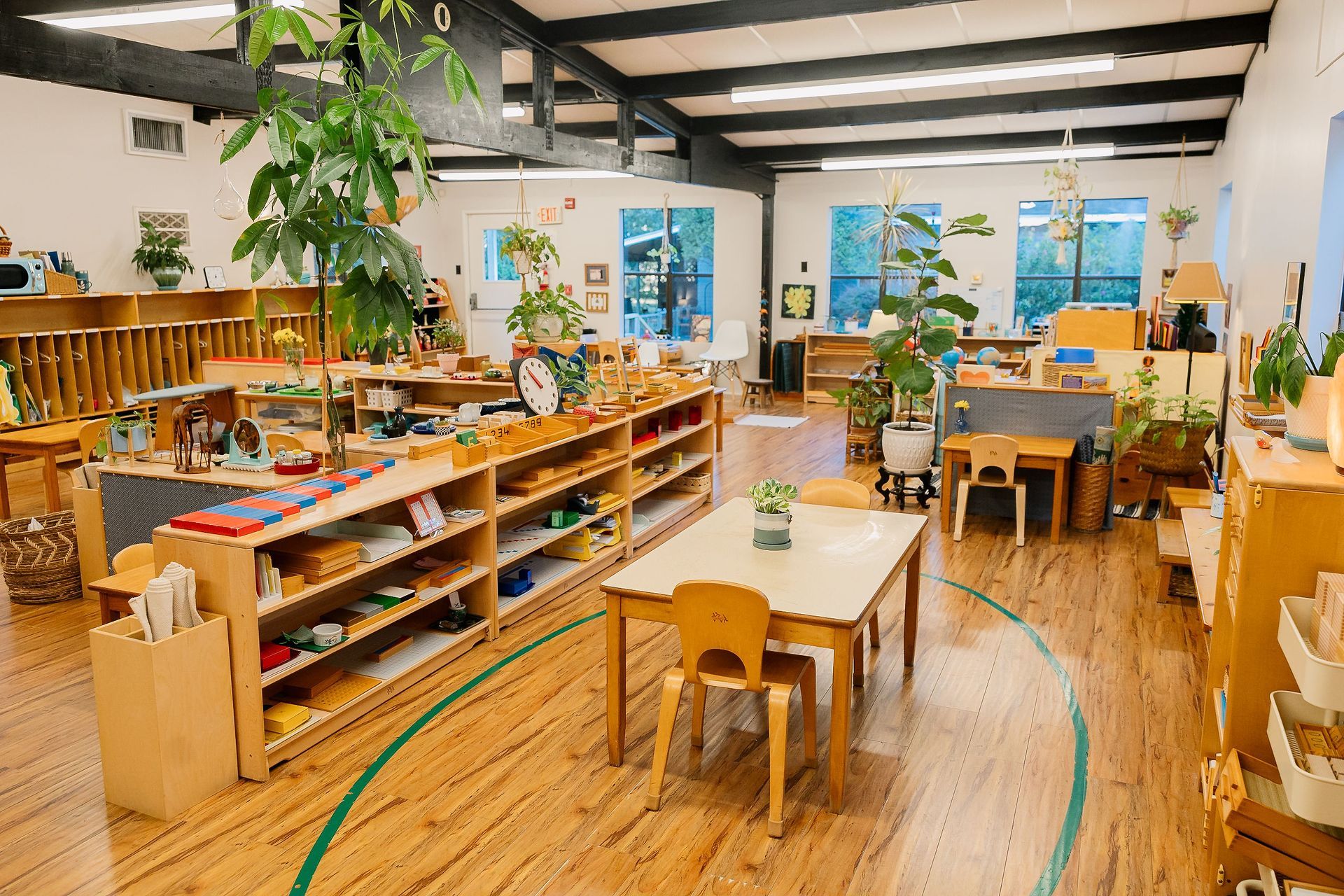
We begin by establishing a designated space for children to practice the control and focus needed to balance along a path. This line is typically taped onto the floor in the shape of a smooth ellipse. You will find this feature prepared inside our Primary environments, as well as outdoors on the playground.
While this work is foundational in our Primary communities, you might discover that your older children find quiet satisfaction in returning to line challenges when seeking focus and physical control.
Preliminary Exercises
The first experience on the line is simply walking naturally along its curve. To set the children up for peaceful harmony when several classmates join in, we introduce small preliminary steps that build cooperation and awareness.
- Coming to the Line: We introduce a gentle auditory signal, like a single drumbeat, and show the children how to place their toes on the line, facing inward. We practice this through a light game where children hop or wander freely, then pause and return to the line when they hear the signal.
- Finding Space: Once the children understand the first signal, we introduce a second signal. This teaches them to adjust their stance so they have comfortable personal space without touching their neighbors.
- Facing the Same Direction: Next, children learn to turn together so everyone faces the same direction, looking toward the back of the child in front of them rather than eye to eye.
We take our time with these foundational steps, offering them over several days or weeks. Our guides never rush this process, because the children find genuine joy in mastering each small element.
Walking to a Beat
With these foundations in place, we introduce movement matched to a rhythm. Children come to the line, find their space, turn together, and begin walking so each step matches the steady beat of a drum. When the drum pauses, they pause.
Our guides model a natural heartbeat rhythm. If we notice feet drifting off the line, we might offer subtle points of interest, suggesting that the children keep their chins lifted, relax their arms, or notice how their feet meet the tape. When the beat stops, the children pause and turn smoothly toward the center of the ellipse, returning to a state of quiet focus.
Varying the Rhythm
As the children grow more confident matching a steady beat, we begin modulating the tempo. We might start at a natural pacing, gently accelerate, slow down, and then bring the tempo back to the original rhythm. Ending with a calm, natural heartbeat tempo helps the children complete the exercise feeling centered and peaceful.
Equilibrium Challenges
Once basic control is established, we offer physical challenges that invite deeper concentration:
- Walking heel-to-toe along the line.
- Carrying objects such as a small bowl of water, a bell that must not ring, a sphere balanced on a spoon, or a tray with a light object.
- Balancing a small beanbag on the head while walking.
- Adjusting posture by placing hands on hips, extending arms upward, or gently turning the head side to side while maintaining balance.
These simple adjustments require incredible focus and body awareness for a young child, turning physical movement into an act of deep concentration.
Rhythm and Expression
As the children master equilibrium, we introduce music into the exercise using Montessori bells, tone bars, or recorded pieces. The children walk while the music plays and rest when it stops. Over time, different musical selections invite varied forms of movement, from a measured walk to a march or a gentle skip. We always conclude with a slow, soothing walk to lower energy levels and restore quiet calm to the room.
Through these intentional line exercises, children develop deliberate control over their bodies, converting random energy into purposeful activity.
You might also like