Montessori Myths: Balancing Teacher Guidance & Exploration

A common misconception about Montessori education is that it is entirely child-led. This couldn’t be further from the truth! Certainly, children feel like they are in the driver’s seat of their education, and that’s by design. Behind the scenes, Montessori-trained teachers here at Northwood Montessori School are skillfully guiding children through carefully sequenced lessons, ensuring they encounter and master all of the subject areas, strands, and standards they need.
The true gift of Montessori education is that it blends the best of two worlds: direct instruction and hands-on learning. Direct instruction means children receive explicit, structured, teacher-led lessons focused on clear objectives and skill mastery. Hands-on learning, on the other hand, is where children engage deeply with materials and ideas, learning concepts through direct experience rather than passive absorption. This dual approach is always tailored to the needs and readiness of each child. In a way, it’s as if every child has their own individualized education plan and one that is seamlessly built into the Montessori model.
The Power of Hands-On Learning
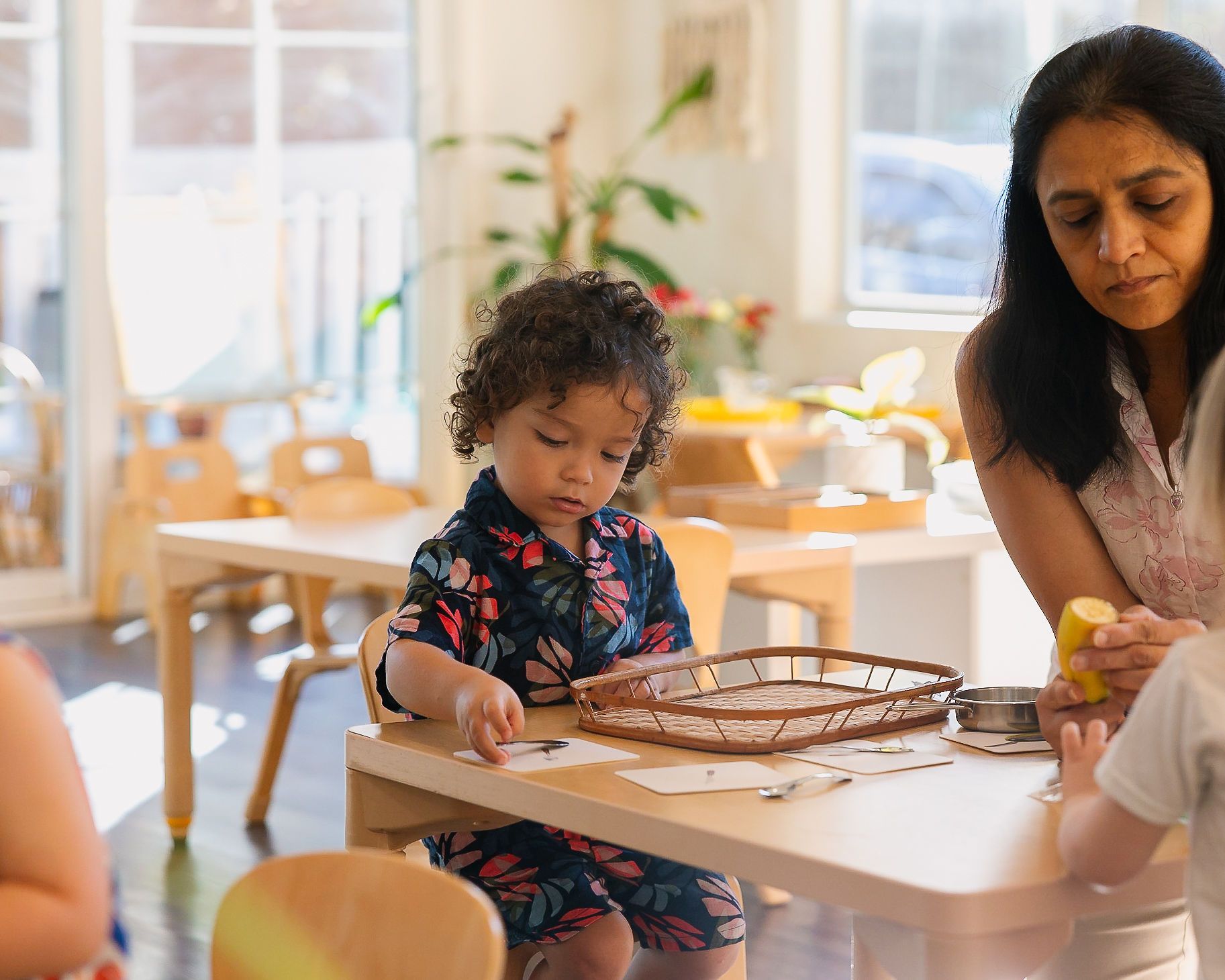
Montessori classrooms are alive with opportunities for children to learn by doing. Instead of simply listening to a teacher or reading about an idea, children are actively engaged with beautiful materials that invite exploration. They pour, build, count, measure, and experiment, discovering concepts in a way that feels natural and meaningful. Learning is not abstract. It is concrete, tactile, and rooted in experience.
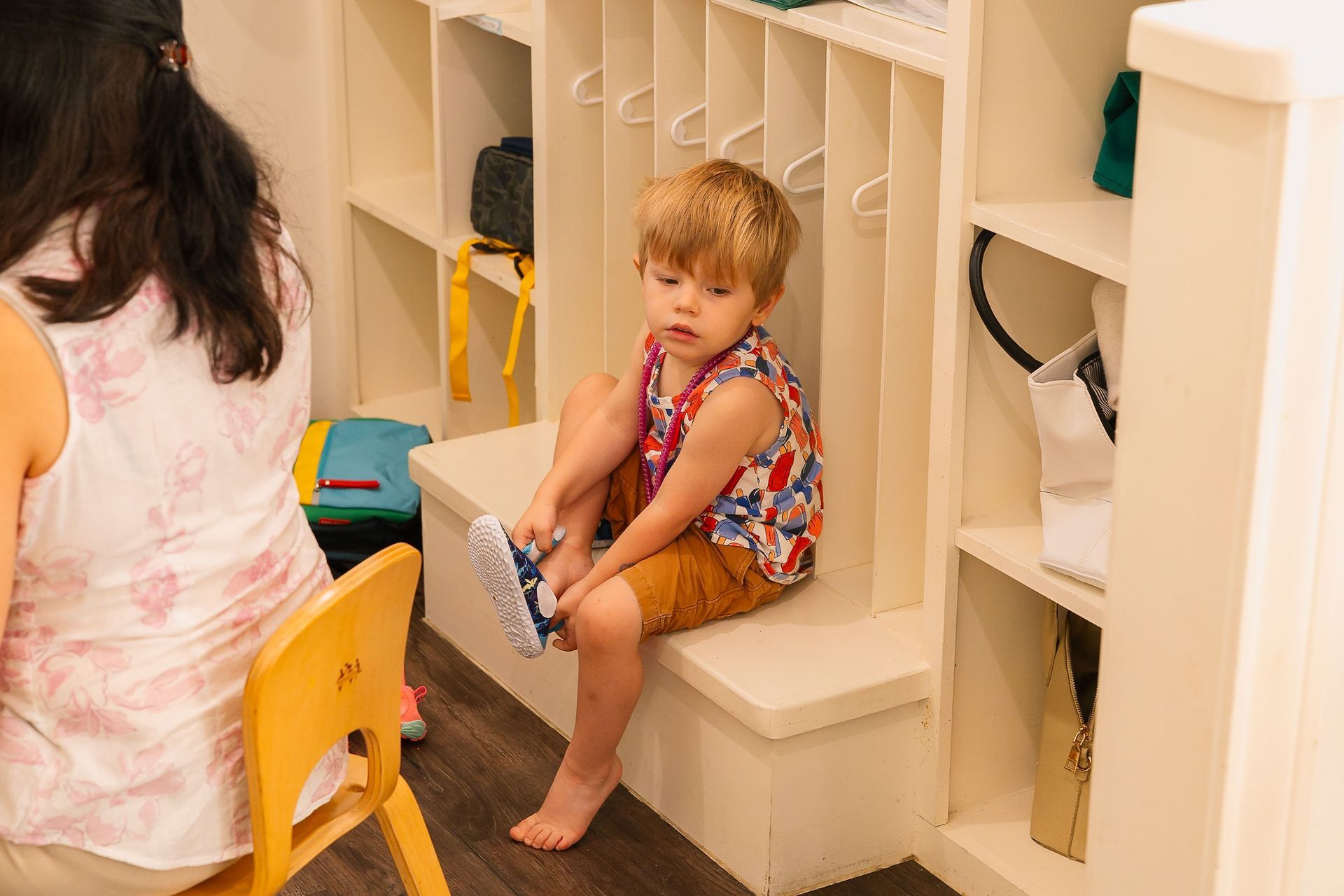
This approach has profound benefits. Children who learn through active engagement develop a deeper understanding because their brains are making strong connections between what they see, touch, and do. They also grow as problem-solvers because they are encouraged to try, adjust, and try again when faced with challenges. The process itself is motivating, which means children stay engaged and joyful in their work. Along the way, they also pick up practical skills they can use in daily life, as well as social skills, due to many of the activities naturally fostering collaboration and cooperation. Because children are learning through experience, the knowledge they gain tends to stick with them, building a lasting foundation.
The Role of Direct Instruction
At the same time, Montessori teachers provide an essential framework through carefully designed lessons. This is not free-for-all learning. Rather, it is a highly structured and intentional process. Teachers give clear, step-by-step presentations that introduce new concepts or skills. These lessons are sequenced in a logical and developmental order, ensuring that children build on what they already know and are ready for what comes next. Even better, these lessons are given one-on-one or to small groups, so the lessons can be tailored to individual children’s learning needs and styles.
During these lessons, children first practice with the teacher’s guidance and support, which allows for immediate feedback and correction. Then, as they gain confidence, they continue working independently, applying what they’ve learned in their own time and in their own way. This direct instruction is especially valuable when children are new to a subject or skill. It provides clarity, reduces confusion, and builds confidence. Over time, the structured approach helps children achieve true mastery and ensures they are well-prepared for more advanced work.
Montessori: The Best of Both Worlds
What makes Montessori unique is the seamless blend of these two approaches. A child might receive a beautifully clear lesson on a new math concept one day and then spend the rest of the week exploring, practicing, and applying that concept with hands-on materials. Teachers provide the roadmap, and then children are given the freedom to travel the path at their own pace, in a way that feels meaningful to them.
This balance allows children to feel ownership of their learning while also benefiting from the expertise and intentionality of their teachers. The result is an education that is joyful, engaging, and deeply effective. Montessori children grow into curious, capable, and confident learners who know both the satisfaction of discovery and the security of guidance.
Montessori education offers the best of both worlds: clear guidance and joyful discovery. See for yourself how this balance supports children’s growth and confidence. Contact us to schedule a tour here at Northwood Montessori School in Houston, Texas.
You might also like