Understanding practical life skills and independence in Montessori education
It is a question many Montessori parents ask, often with a mix of curiosity and concern. Why polishing? Why scrubbing tables? Why tasks that, at first glance, seem far removed from academics?
From an AMI Montessori perspective, the answer is both simple and profound: this is the work that makes all other work possible.
The Foundation of the Primary Environment
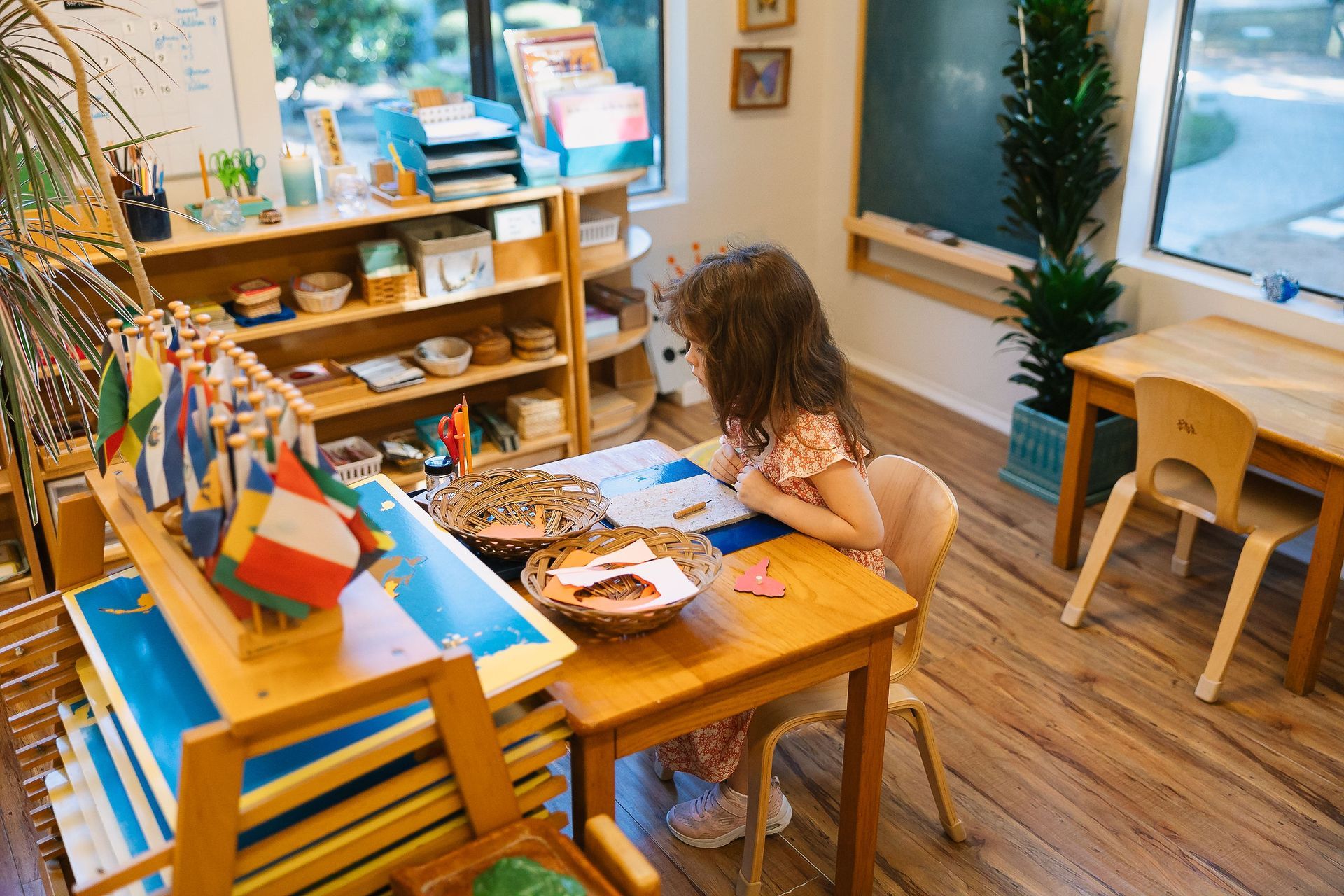
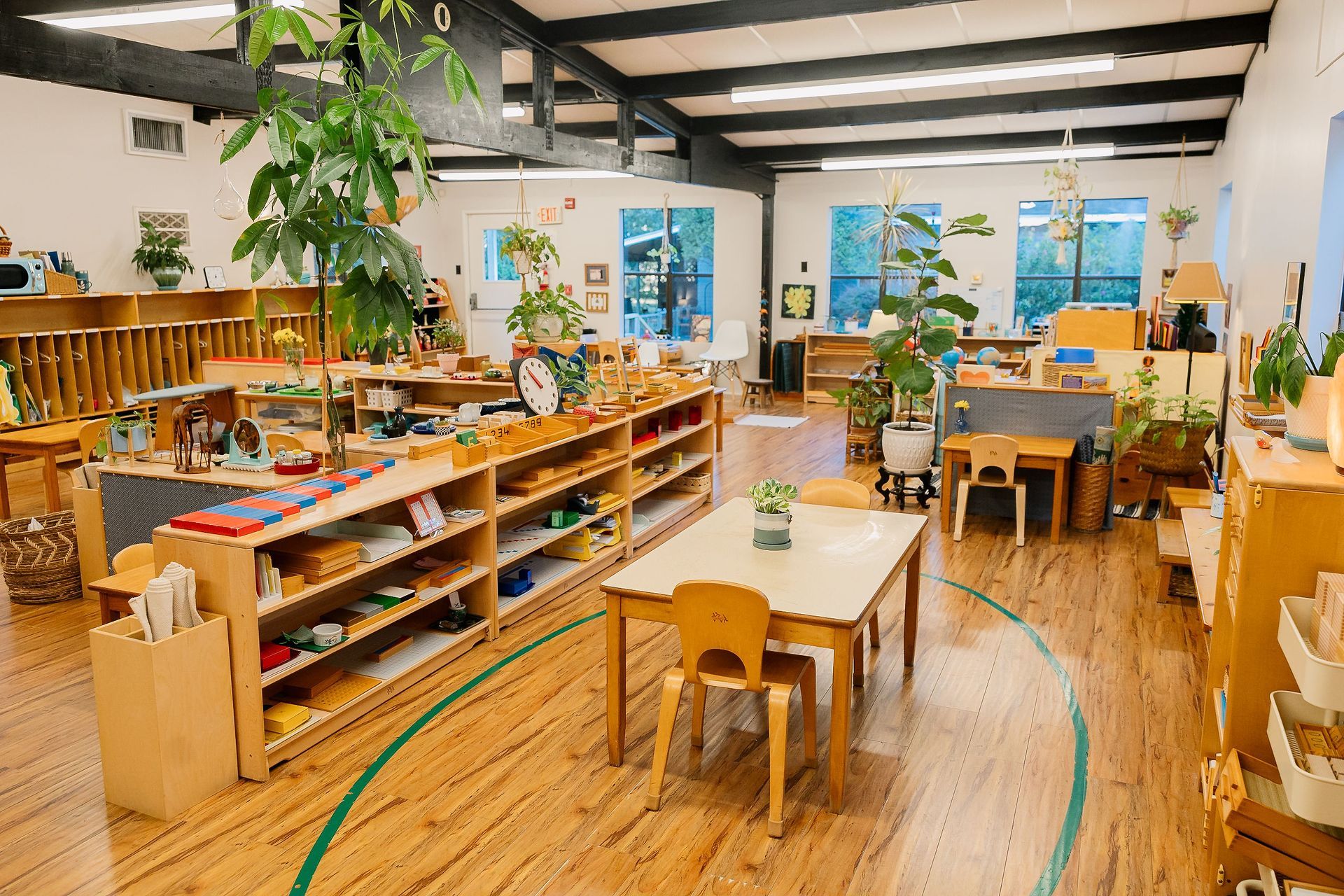
In the Montessori primary classroom (ages 3 - 6), practical life is not an “extra” or a preliminary warm-up, it is the foundation of the entire environment. Dr. Maria Montessori observed that young children are irresistibly drawn to purposeful, real activity. When given the opportunity to engage in meaningful tasks; washing, pouring, polishing, they enter into deep concentration and repetition, a state she described as normalization.
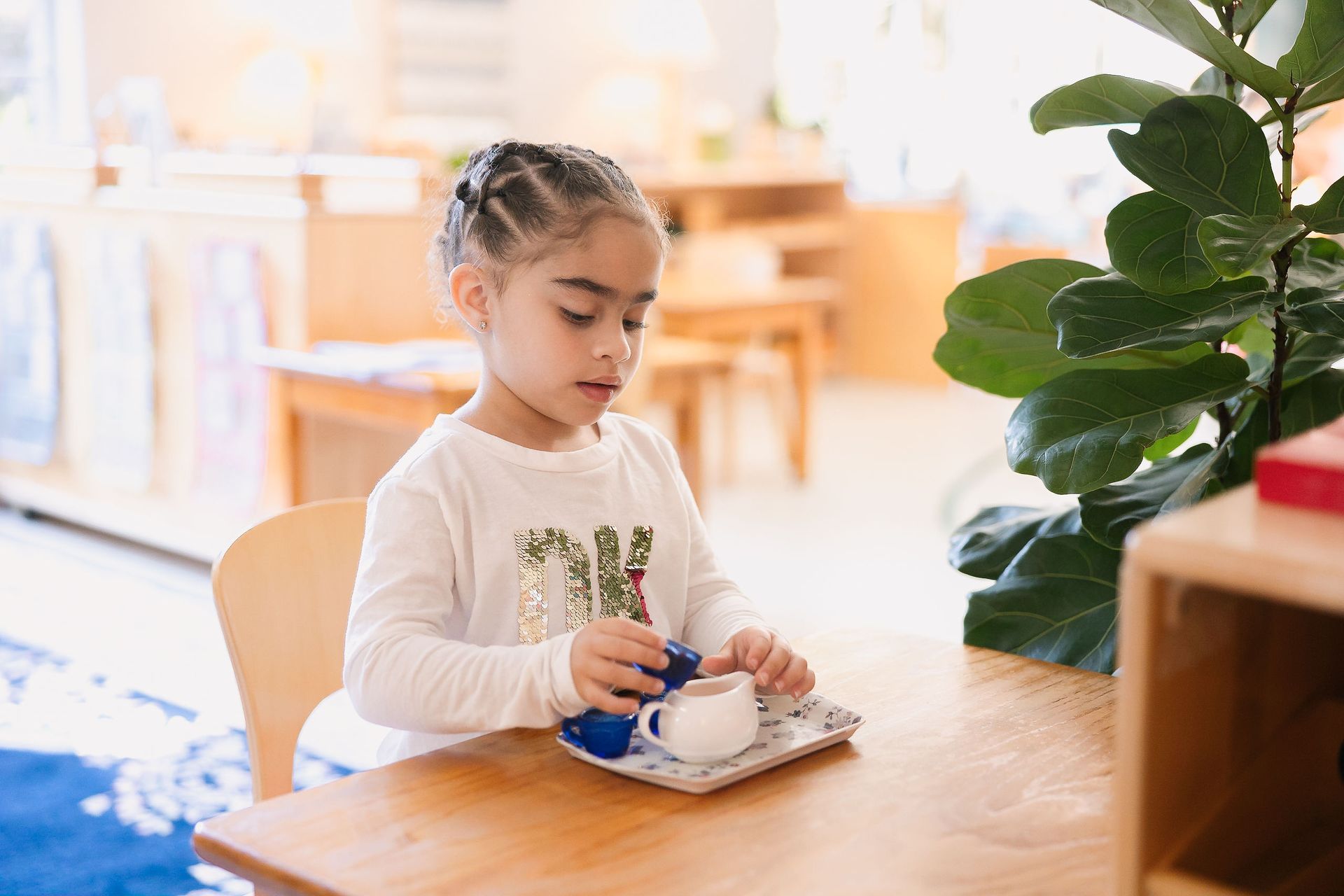
These activities are carefully designed around four core areas: care of self, care of the environment, control of movement, and grace and courtesy. Through them, the child constructs essential capacities: order, coordination, concentration, and independence.
This is not symbolic play. This is real work, undertaken with intention.
The Hidden Curriculum: What the Child Is Really Learning
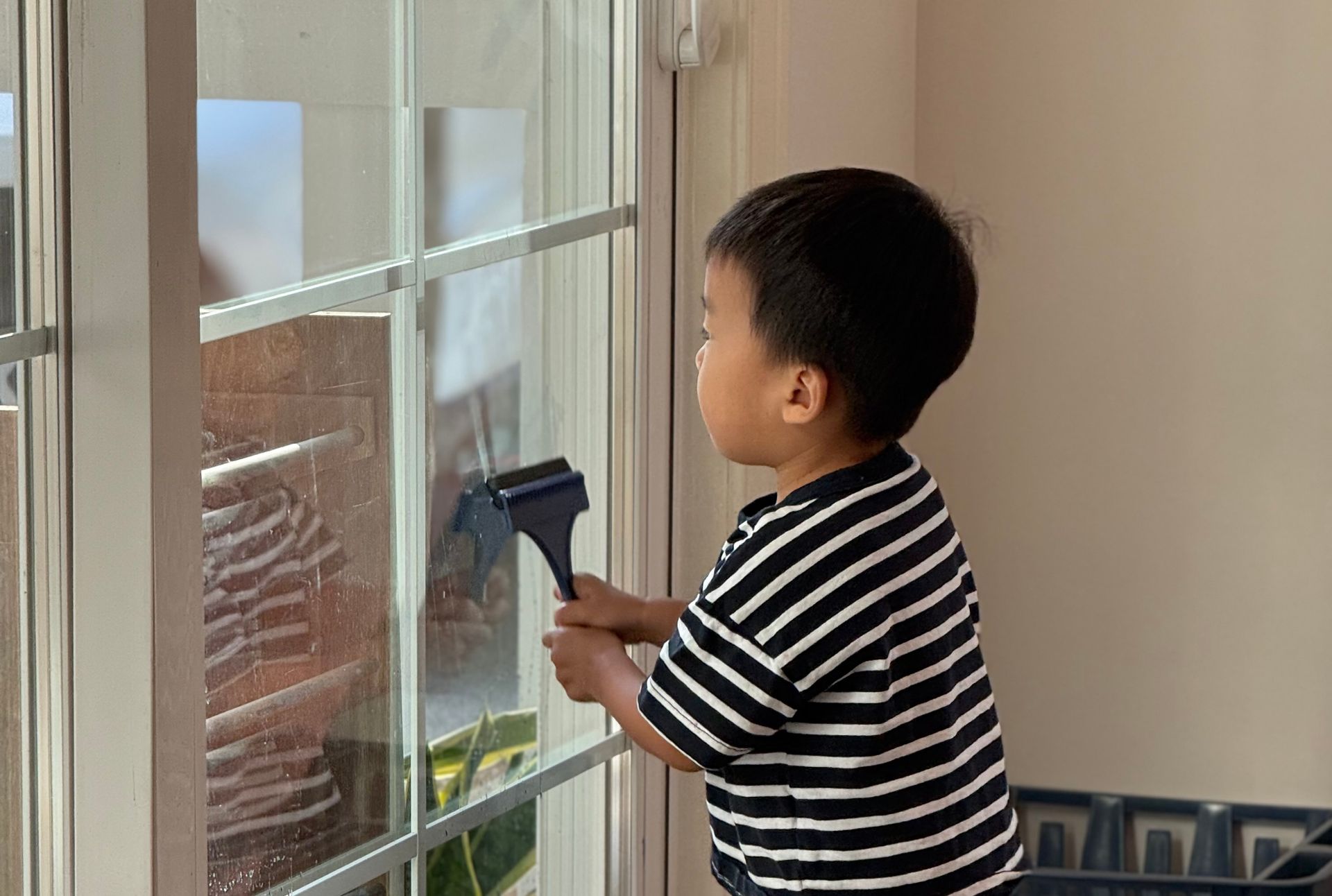
When a child washes a table or cleans a window, the visible task is only the surface. Beneath it lies a sophisticated developmental process.
Each practical life activity is structured with:
- A clear sequence of steps
- A defined beginning, middle, and end
- Precise, controlled movements
- Opportunities for repetition and mastery
Through this, the child refines both motor control and executive function. They learn to follow a logical sequence, to attend to detail, and to complete a cycle of activity independently.
Montessori education recognizes that the hand is the instrument of the mind. Repeated, purposeful movement strengthens neural pathways that support higher-order cognition. Pouring, spooning, scrubbing, and polishing are not incidental, they are neurological preparation.
As noted within Montessori research and practice, these activities cultivate “concentration, coordination, independence, and an appreciation for routine,” forming the conditions under which intellectual work can later flourish.
Practical Life as Preparation for Literacy
A common question follows naturally: What does this have to do with reading?
The connection is direct, though not always immediately visible.
Practical life builds the preconditions of literacy in several critical ways:
1. Development of Concentration
Before a child can decode language, they must be able to sustain attention. Practical life activities are often the child’s first experience of prolonged, self-directed focus. Montessori observed that children who engage deeply in these tasks develop the capacity to concentrate for extended periods, an essential prerequisite for reading and writing.
2. Sequential Thinking
Every practical life exercise follows an ordered process. This strengthens the child’s ability to understand sequence, an underlying cognitive structure necessary for both phonetic decoding and narrative comprehension.
3. Fine Motor Control
The precise movements required for pouring, transferring, and polishing directly prepare the hand for writing. Control of the wrist, grip, and coordination are refined long before a pencil is introduced.
4. Executive Function and Independence
Children learn to initiate, carry out, and complete tasks independently. These executive functioning skills correlate strongly with later academic success, including literacy development.
Montessori literature explicitly notes that practical life “lays the foundation for learning in every other area,” including reading, by strengthening focus, coordination, and the ability to follow steps.
Additionally, contemporary Montessori-aligned research and educational analysis consistently link self-regulation and fine motor development; both cultivated through practical life, to improved early reading outcomes. While not always isolated as a single-variable study, the correlation is well-established within developmental science; children who can control their movement, sustain attention, and sequence actions are significantly better prepared for literacy acquisition.
More Than Preparation: A Formation of the Whole Child
It is important, especially from an AMI perspective, not to reduce practical life to mere academic preparation.
Practical Life is not valuable
because it leads to reading.
It is valuable because it forms the human being who is capable of reading and much more.
Through these activities, the child develops:
- A sense of responsibility and belonging
- Respect for their environment and community
- Confidence in their own capabilities
- Joy in purposeful work
As Montessori educators often emphasize, children engaged in practical life are not simply learning tasks, they are learning how to be.
These experiences cultivate what Montessori described as an “inner discipline,” emerging not from external control, but from meaningful, self-directed activity.
A New Lens for Parents
So when you see your child polishing, sweeping, or carefully washing a window, it may help to reframe the image.
They are not being kept from “real learning.”
They are engaged in its very beginnings.
They are building the concentration that will allow them to read.
The coordination that will allow them to write.
The independence that will allow them to think.
At Northwood Montessori, in the primary environment, practical life is the quiet, essential work; the work that prepares the child not only for academics, but for life itself.
You might also like