New Title
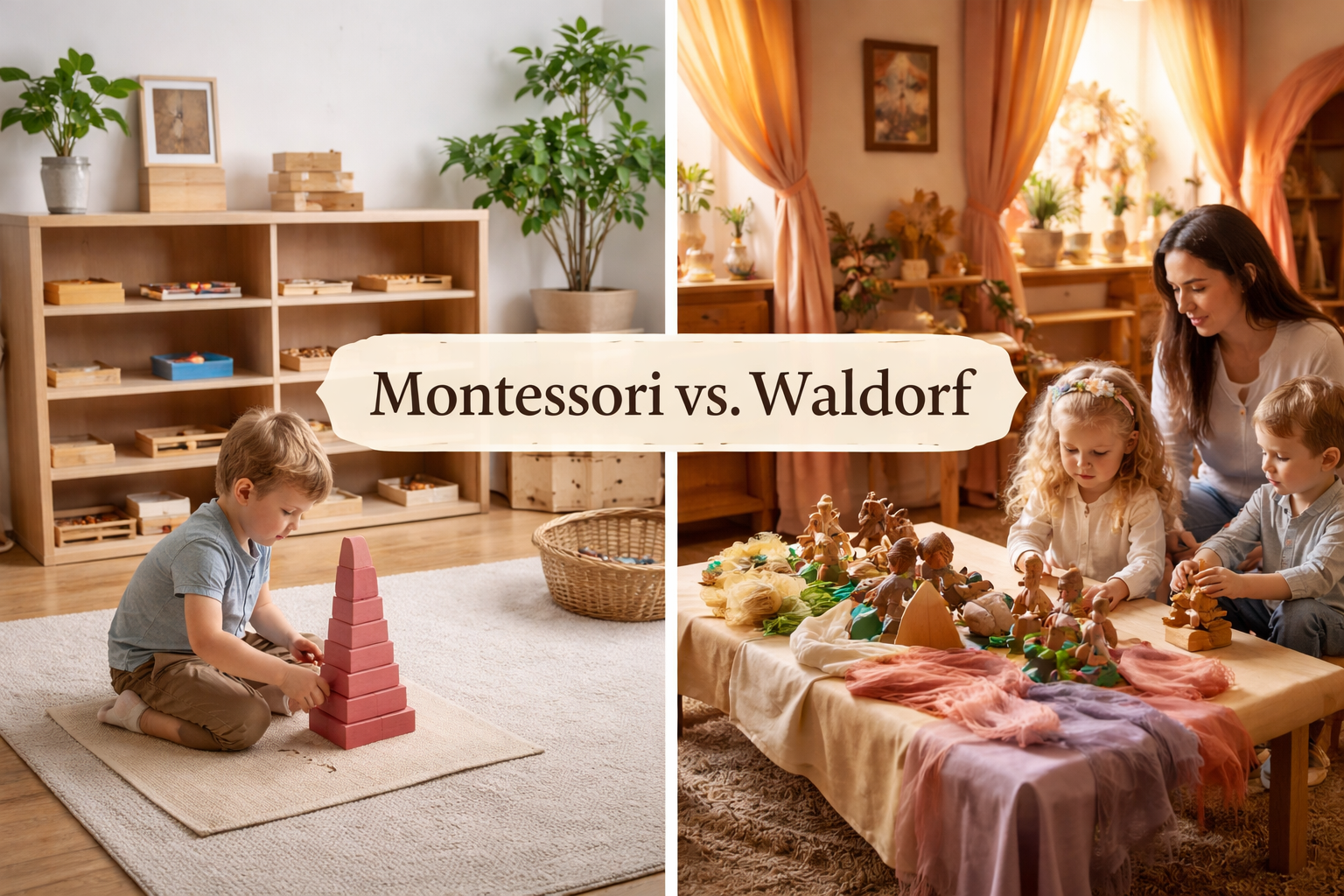
Choosing the right educational environment for your child is one of the most important decisions a family can make. Among the most commonly compared approaches are Montessori, Waldorf, and traditional education. While all aim to support children’s growth, their philosophies, classroom structures, and outcomes differ significantly.
At Northwood Montessori, we believe that understanding these differences helps families make informed, intentional choices aligned with their child’s development.
What Is Montessori Education?
Developed by Maria Montessori, the Montessori method is a research-based, child-centered approach grounded in observation and respect for natural development.
Key Characteristics of Montessori
- Child-led learning: Children choose purposeful work based on interest and readiness
- Prepared environment: Classrooms are carefully designed with hands-on, self-correcting materials
- Mixed-age classrooms: Encourage peer learning and leadership
- Focus on independence: Children develop autonomy, responsibility, and confidence
- Uninterrupted work cycles: Deep concentration is protected and valued
Montessori Goal
To cultivate independent, self-motivated learners who are capable of critical thinking, collaboration, and meaningful engagement with the world.
What Is Waldorf Education?
Waldorf education was founded by Rudolf Steiner and emphasizes imagination, creativity, and holistic development.
Key Characteristics of Waldorf
- Teacher-led structure: The teacher guides the curriculum and rhythm
- Emphasis on imagination: Storytelling, dramatic play, and arts are central
- Delayed academics: Formal reading and writing are introduced later
- Natural materials: Toys and classroom items are simple and sensory-based
- Rhythm and routine: Daily and seasonal rhythms are deeply embedded
Waldorf Goal
To nurture the whole child; head, heart, and hands with a strong emphasis on creativity and emotional development.
What Is Traditional Education?
Traditional education is the most common model in public and private schools, structured around standardized curriculum and teacher-directed instruction.
Key Characteristics of Traditional Education
- Teacher-centered instruction: The teacher leads lessons for the whole group
- Standardized curriculum: Learning objectives are uniform across students
- Age-based classrooms: Children grouped strictly by age
- Assessment-driven: Grades, tests, and benchmarks measure progress
- Structured schedule: Subjects are divided into fixed time blocks
Traditional Education Goal
To ensure students meet academic standards and benchmarks through structured instruction and evaluation.
Key Differences at a Glance
1. Approach to Learning
- Montessori: Self-directed, hands-on exploration
- Waldorf: Imaginative, teacher-guided experiences
- Traditional: Instruction-based, curriculum-driven learning
2. Role of the Teacher
- Montessori: Guide and observer
- Waldorf: Central authority and storyteller
- Traditional: Instructor and evaluator
3. Use of Materials
- Montessori: Specialized, self-correcting materials tied to real-world concepts
- Waldorf: Open-ended, natural materials that encourage imagination
- Traditional: Textbooks, worksheets, and digital tools
4. Academic Focus
- Montessori: Early exposure through concrete experiences
- Waldorf: Delayed academics, focus on creativity first
- Traditional: Early and structured academic instruction
5. Classroom Environment
- Montessori: Calm, orderly, child-centered
- Waldorf: Warm, artistic, rhythm-based
- Traditional: Structured, teacher-centered
Why Families Choose Montessori
Families often choose Montessori because it aligns with how children naturally learn. Research and observation show that young children thrive when they are given:
- Freedom within limits
- Opportunities for meaningful, hands-on work
- Time to concentrate without interruption
- Environments that foster independence and responsibility
In Montessori classrooms, children are not passive recipients of information, they are active participants in their own development.
Final Thoughts
While Montessori, Waldorf, and traditional education all offer valuable experiences, they reflect fundamentally different views of the child and how learning happens.
- Montessori trusts the child’s inner drive to learn
- Waldorf nurtures imagination and creativity through guided experiences
- Traditional education prioritizes structure and standardized outcomes
At Northwood Montessori, we embrace an approach that respects each child as an individual, capable of growth, independence, and deep, meaningful learning.
You might also like