Understanding How Mathematics Is Introduced in the Montessori Primary Environment
One of the most common questions parents ask when entering a Montessori primary classroom is:
"Why aren’t the younger children doing worksheets, writing numbers, or memorizing math facts yet?"
In traditional preschool and pre-k programs, early academic performance is often measured by visible outcomes: reciting numbers, counting to 100, completing math worksheets, or writing numerals neatly at an early age. In a Montessori environment; however, mathematics is approached very differently and very intentionally.
At Northwood Montessori, we follow the child’s natural development rather than pushing abstract academic concepts before the child is developmentally ready to receive them. Maria Montessori’s research revealed that true mathematical understanding is not built through memorization or early performance, but through movement, sensory exploration, order, concentration, and hands-on experience.
The result is not simply children who can recite numbers.
The result is children who deeply understand mathematics.
The Young Child’s Mind Develops in Stages
Maria Montessori observed that children pass through sensitive periods, these are unique windows of development during which the child is naturally drawn toward specific kinds of learning.
Before a young child can truly understand abstract mathematical concepts, the child must first build foundational capacities such as:
- order
- coordination
- concentration
- independence
- language
- sequencing
- classification
- spatial awareness
- logical thinking
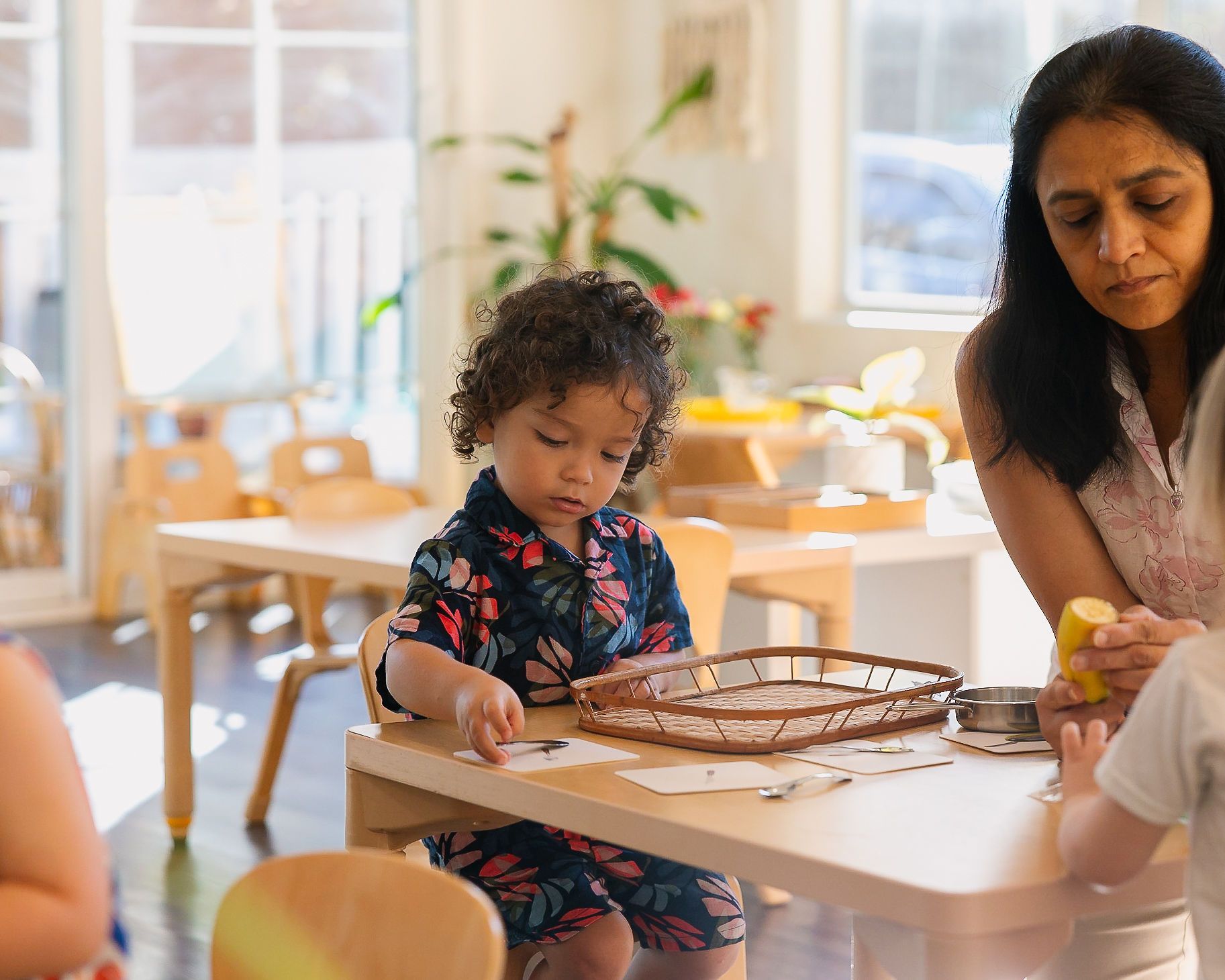
This is why the youngest children in a Montessori primary classroom are often engaged in Practical Life and Sensorial work long before formal mathematics is introduced.
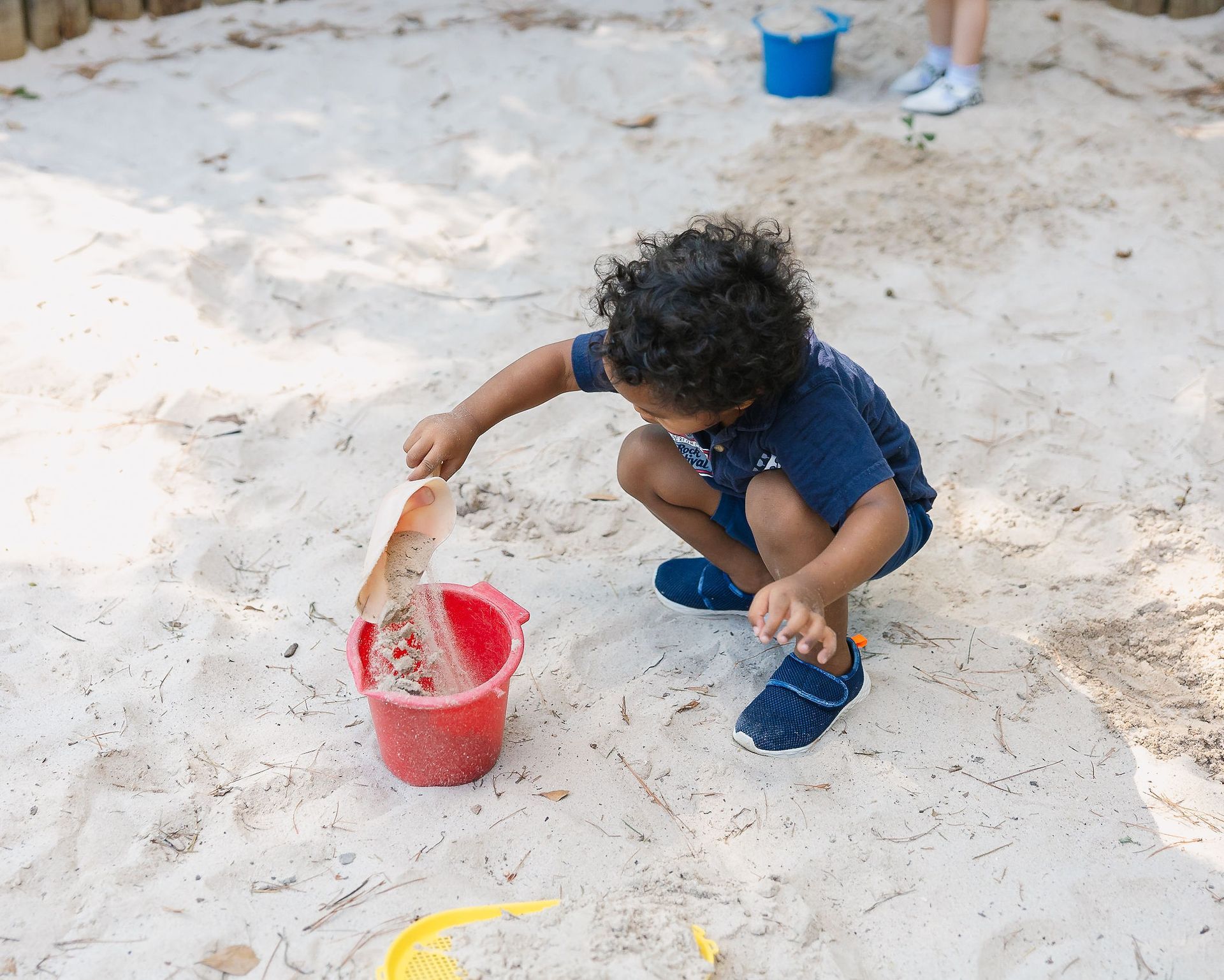
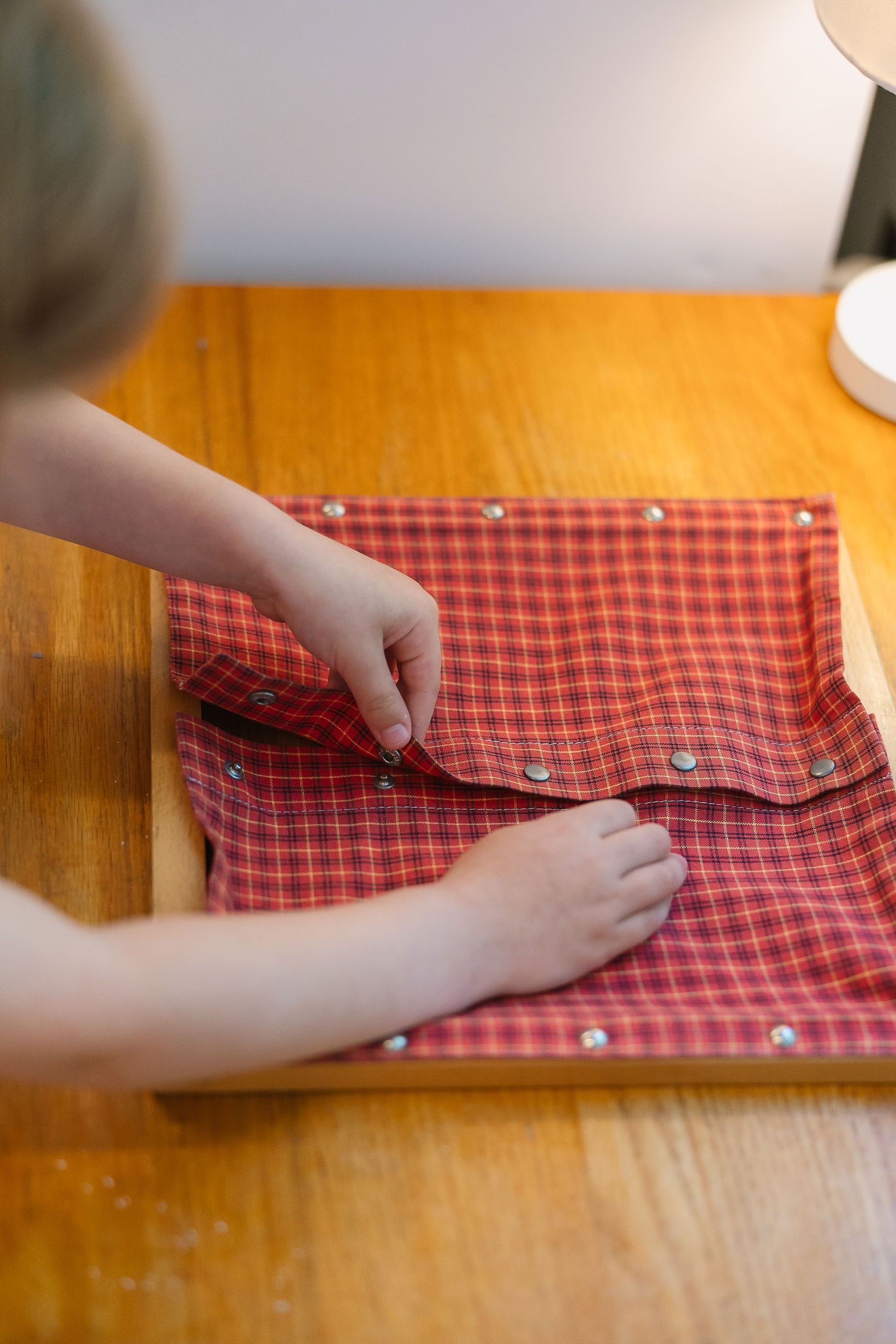
To the untrained eye, polishing, pouring, sweeping, matching colors, grading sizes, or carrying trays may not appear connected to math at all. Yet these activities are preparing the mind for mathematical reasoning in profound ways.
The child is unconsciously building:
- precision of movement
- understanding of sequence
- visual discrimination
- one-to-one correspondence
- pattern recognition
- order and logic
- the ability to concentrate for extended periods
These are the true foundations of mathematics.
Why Mathematics Is Introduced Gradually in Montessori
In Montessori education, we do not rush children into abstraction before the mind is ready.
A three-year-old may be capable of memorizing number names or tracing numerals repeatedly, but memorization alone does not mean understanding has taken place. When abstract academic expectations are introduced too early, the child may begin working for external approval rather than from genuine internal interest and comprehension.
Maria Montessori observed that when children are pushed academically before developmental readiness, several things can happen:
- learning becomes mechanical rather than meaningful
- children rely on memorization instead of understanding
- anxiety around mistakes may develop
- concentration can weaken
- intrinsic motivation may decrease
- children may begin associating learning with pressure rather than joy
In some cases, repeatedly asking a very young child to write numbers or perform abstract academic tasks before the hand and mind are prepared can actually interfere with natural development rather than support it.
This does not mean the child is “behind.”
It means we are respecting the child’s developmental timeline.
Concrete Before Abstract: The Montessori Mathematics Sequence
One of the most distinctive features of Montessori math education is the use of concrete materials that allow children to physically experience mathematical concepts before being asked to understand them abstractly.
Rather than memorizing symbols first, the child experiences quantity with the hands.
For example:
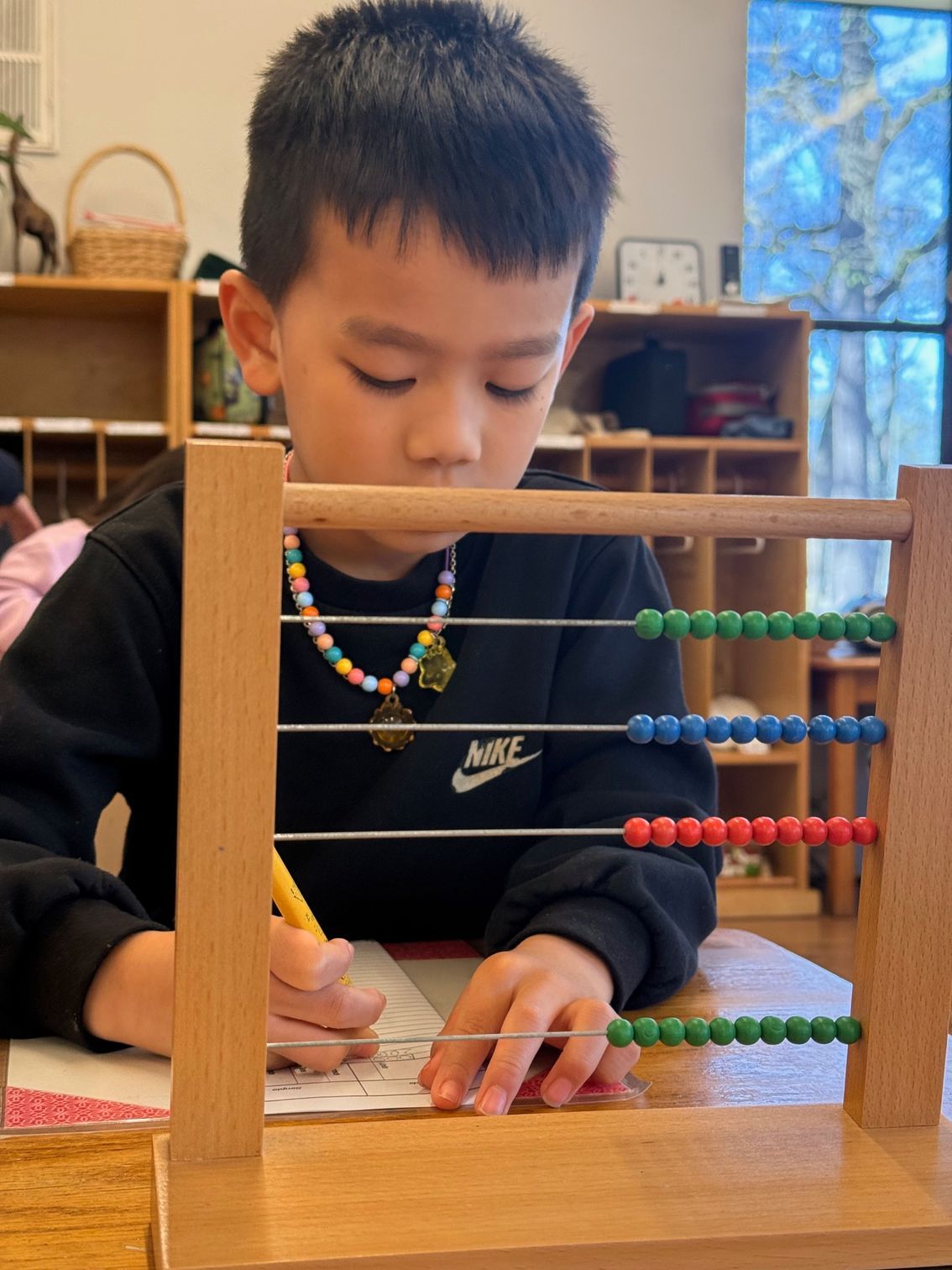
- the child feels quantity through the Number Rods
- sees decimal hierarchy with the Golden Beads
- physically combines quantities in addition and subtraction
- experiences patterns and sequencing through Sensorial materials
- develops muscular memory through movement and repetition
In Montessori, mathematics is not separated from the senses or the body. The child learns through movement, touch, repetition, exploration, and discovery.
By the time abstract operations are introduced, the child already has a deep internal understanding of quantity and numerical relationships.
This is one reason Montessori students often develop remarkable confidence and ease with mathematics later on. The concepts were not rushed. They were built carefully and concretely.
The Importance of Readiness
In the Montessori primary environment, we respect the developmental readiness of each individual child.
Some children become deeply interested in numbers shortly after turning three. Others spend more time building concentration, language, movement, and coordination before mathematical materials call to them naturally. Both paths are normal and healthy.
Montessori education is not based on comparison or standardized timelines. It is based on observation.
The guide carefully prepares lessons according to the child’s readiness, interest, and developmental needs rather than according to external pressure or arbitrary academic pacing.
This individualized approach protects the child’s confidence and preserves the natural love of learning.
What Parents Often Notice Later
Parents are sometimes surprised that children who were not pressured academically at age three later develop strong mathematical abilities with apparent ease and enthusiasm.
This is because the earlier years were not “empty” academically. They were foundational.
The child who spent months pouring water, grading cylinders, washing tables, matching dimensions, carrying trays carefully, and repeating Sensorial work was preparing the mathematical mind all along.
In Montessori education, we understand that intellectual development cannot be separated from the development of movement, concentration, order, and independence.
The goal is not early performance.
The goal is deep understanding.
Trusting the Child’s Natural Development
At Northwood Montessori, we believe children learn best when their developmental needs are respected rather than accelerated artificially. Mathematics is introduced thoughtfully, concretely, and joyfully, allowing each child to build true understanding at the appropriate time.
Maria Montessori’s research showed us that children possess a natural drive toward learning when given the proper environment, freedom within limits, and carefully prepared materials.
When we trust the child’s developmental process, mathematics becomes more than memorization.
It becomes discovery, confidence, logic, order, and joyful understanding.
You might also like