Understanding Maria Montessori's Sensitive Periods
Have you ever wondered why young children seem to become deeply fascinated with certain activities, repeating them over and over with intense focus? According to Maria Montessori’s research, these moments are not random. They are part of what she called sensitive periods, powerful windows of opportunity in a child’s development.
At Northwood Montessori School, guided by AMI (Association Montessori Internationale) pedagogy, understanding and supporting these sensitive periods is central to how we nurture each child’s growth.
What Are Sensitive Periods?
Sensitive periods are specific blocks of time in early childhood when a child is naturally driven to acquire particular skills or knowledge. During these phases, learning happens effortlessly, joyfully, and with deep concentration.
Maria Montessori observed that children are biologically prepared to absorb certain aspects of their environment at precise stages. When supported appropriately, children develop abilities with remarkable ease. When missed, those same skills may require significantly more effort to master later.
Key Sensitive Periods in Early Childhood
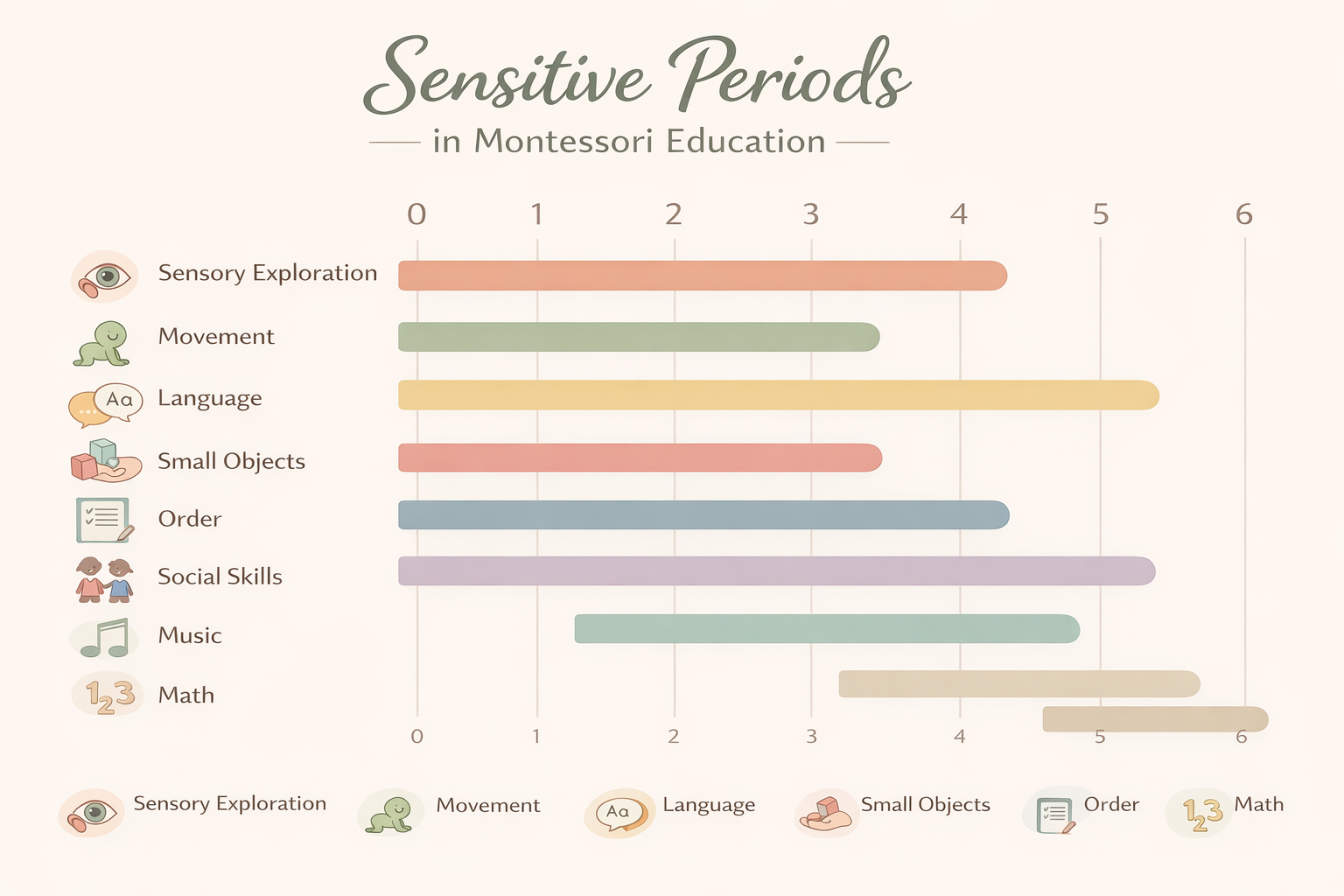
AMI Montessori education recognizes several core sensitive periods, especially from birth to age six:
1. Sensitive Period for Order (0–6 years)
Children crave consistency and structure. They are drawn to routines, repetition, and organization in their environment. This is why a well-prepared Montessori classroom emphasizes predictability and calm order.
2. Sensitive Period for Language (0–6 years)
During this time, children absorb language naturally from their surroundings. From babbling to complex sentences, their capacity for vocabulary and grammar development is extraordinary.
3. Sensitive Period for Movement (0–6 years)
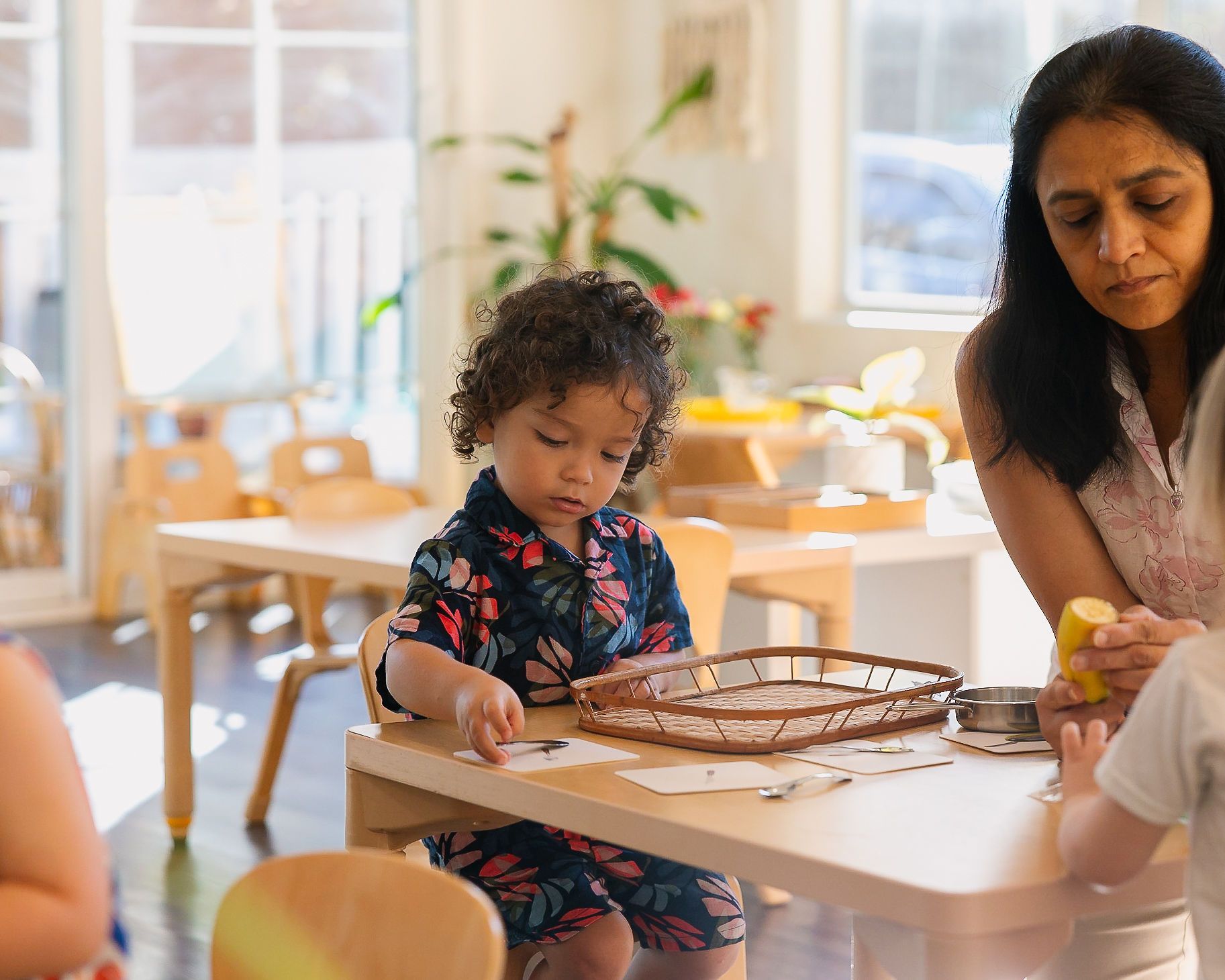
Children refine both gross and fine motor skills. Purposeful movement; carrying, pouring, and walking carefully is essential to their cognitive and physical development.
4. Sensitive Period for Refinement of the Senses (2–6 years)
Children become keen observers, exploring textures, sounds, colors, and shapes. Montessori materials are specifically designed to isolate sensory qualities, helping children categorize and understand the world.
5. Sensitive Period for Social Behavior (2.5–6 years)
Children begin to develop empathy, manners, and an understanding of community. Grace and courtesy lessons in Montessori classrooms directly support this growth.
6. Sensitive Period for Small Objects (1–4 years)
Young children often show fascination with tiny details. This focus supports concentration and fine motor development.
Why Sensitive Periods Matter in AMI Montessori Education
In AMI Montessori environments like Northwood Montessori School, educators are trained to carefully observe each child and recognize these sensitive periods as they emerge.
Rather than forcing learning, Montessori guides:
- Prepare environments rich with purposeful materials
- Offer lessons at the right moment
- Allow freedom within limits
- Respect each child’s natural developmental timeline
This approach ensures that learning aligns with the child’s internal drive, leading to deeper understanding and long-term retention.
The Role of the Prepared Environment
A hallmark of AMI pedagogy is the prepared environment, a thoughtfully designed space that meets the developmental needs of the child.
At Northwood Montessori School, classrooms are:
- Ordered and aesthetically calm
- Filled with hands-on, self-correcting materials
- Structured to promote independence
- Designed to encourage exploration during sensitive periods
This environment allows children to follow their natural curiosity and engage in meaningful work.
Supporting Sensitive Periods at Home
Parents can also support sensitive periods by:
- Maintaining consistent routines
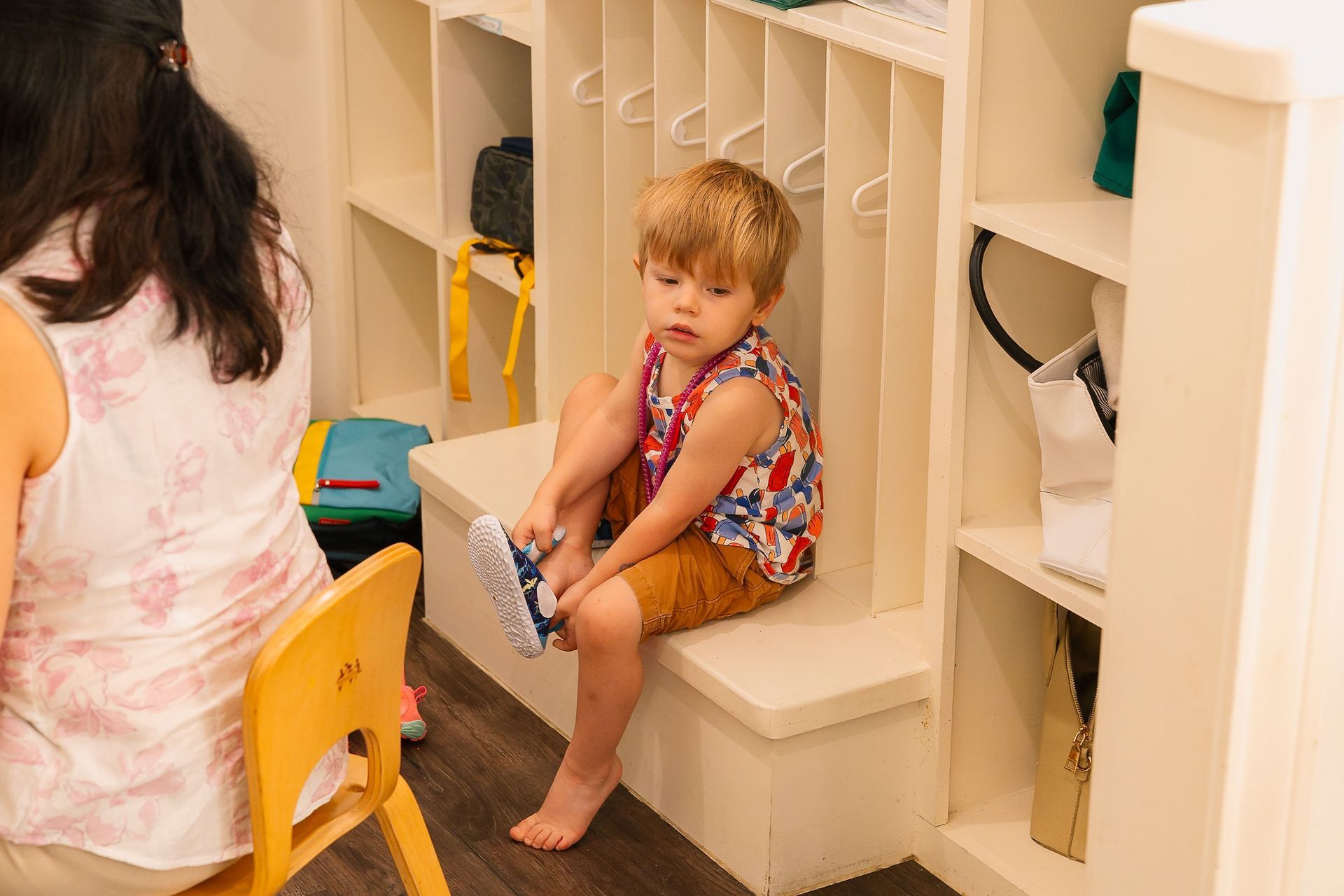
- Encouraging independence in daily tasks
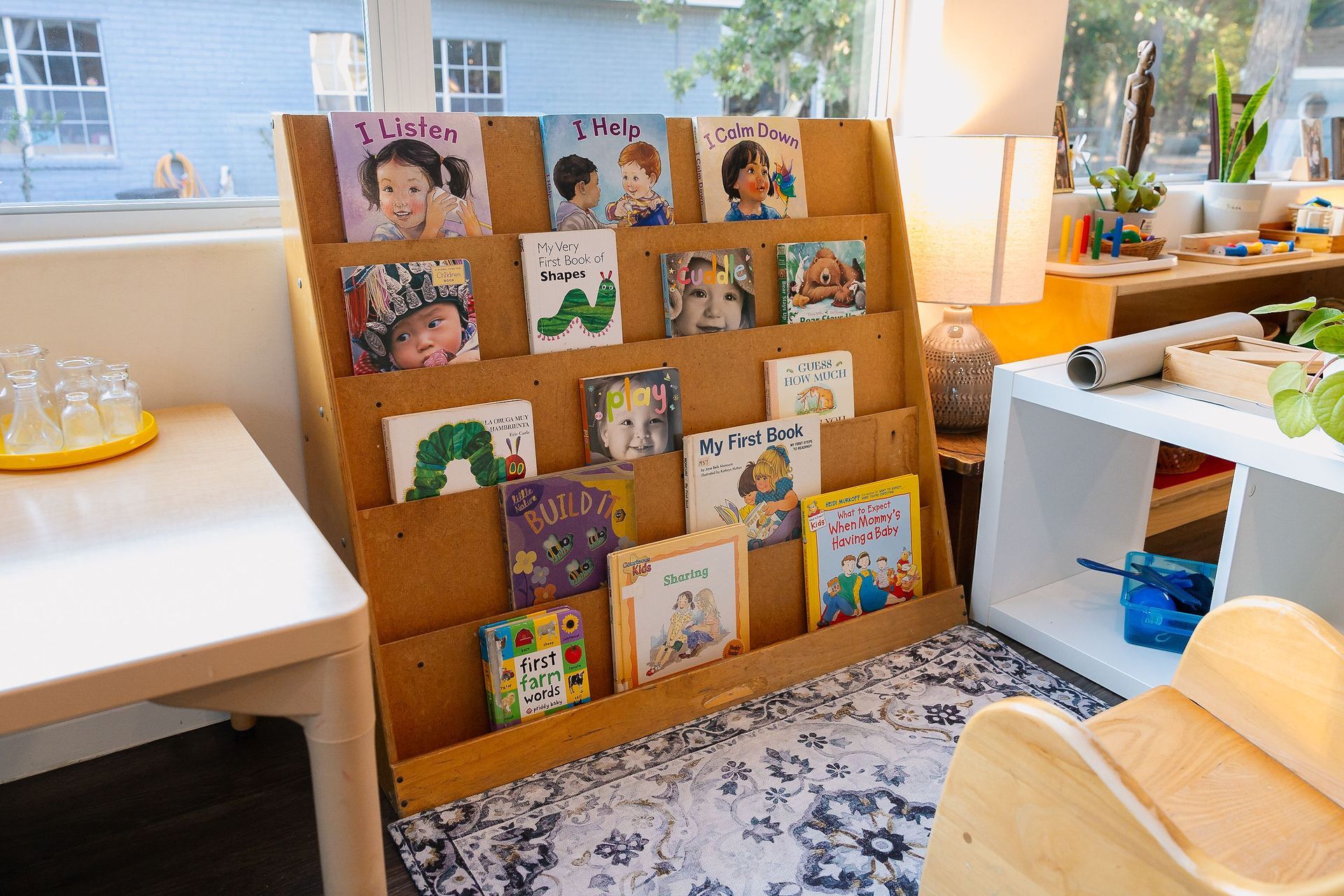
- Providing rich language experiences (reading, conversation)
- Allowing time for uninterrupted play and concentration
Recognizing these developmental windows helps parents respond with patience and intention.
A Foundation for Lifelong Learning
Sensitive periods are one of Maria Montessori’s most profound contributions to early childhood education. By respecting these natural stages, we empower children to learn with joy, confidence, and purpose.
At Northwood Montessori School, our commitment to AMI principles ensures that every child is seen, supported, and guided at exactly the right moment in their development.
You might also like