The Art of the Guide: How the Role of the Adult Differs in a Montessori Classroom

Our society is deeply familiar with the traditional image of a teacher. In conventional classrooms, teachers deliver information, direct daily lessons, and instruct the entire class from the front of the room.
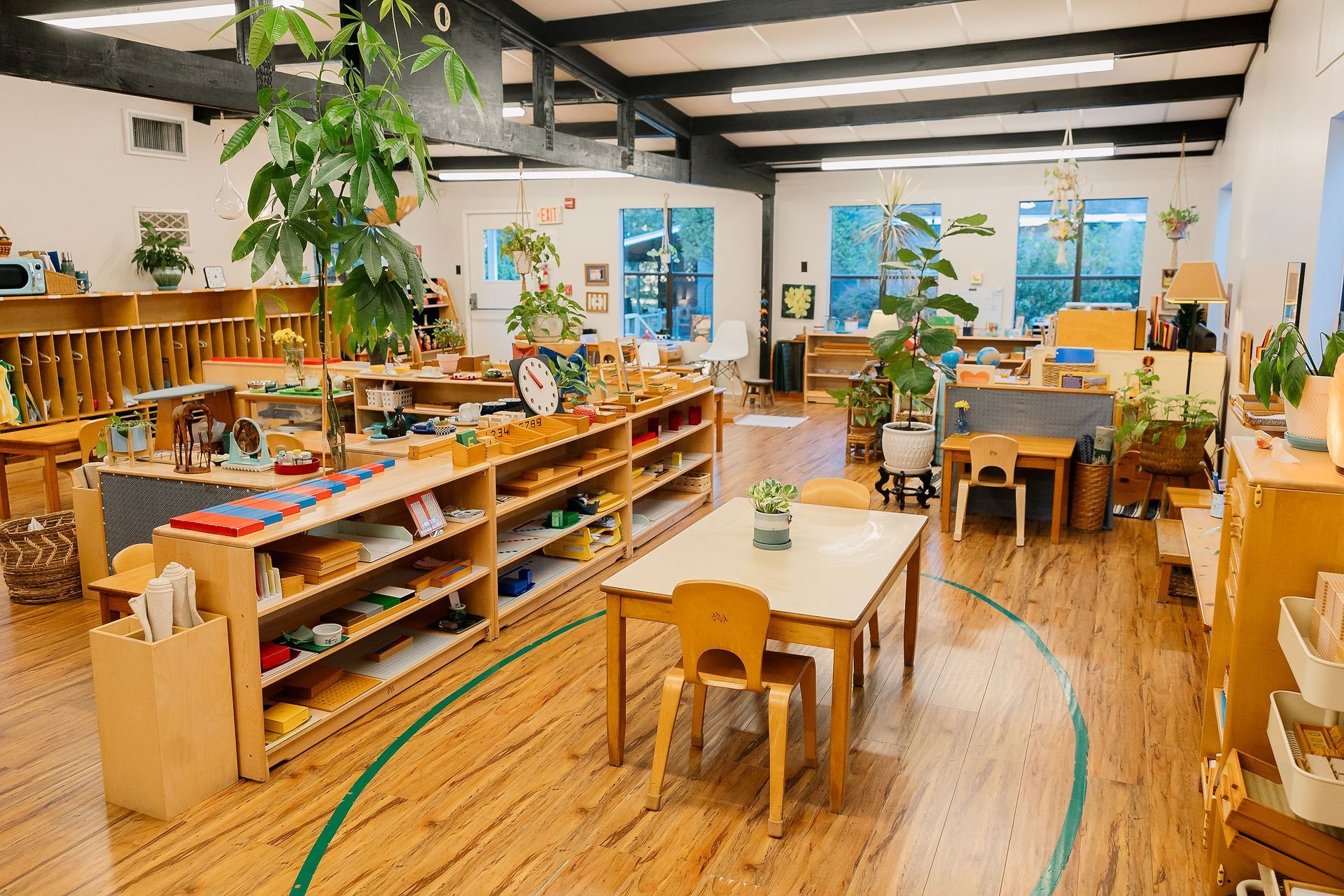
In a Montessori environment, however, the role of the adult is far more subtle and nuanced. The adult is there to prepare the room, observe with care, model graceful behavior, and introduce key materials. The materials themselves do the teaching, while the adult serves as a bridge between the child and the prepared environment.
For parents accustomed to traditional schooling, this concept can sometimes feel unexpected. How can children learn effectively if the teacher is not constantly instructing?
Traditional vs. Montessori View of the Child
Because the Montessori approach operates on a foundational trust in human development, the responsibilities and skills of the adult are entirely different from those in a traditional setting.
Historically, traditional models viewed children as blank slates or empty vessels waiting to be filled with information. In that framework, the teacher is the primary source of knowledge, passing down facts, corrections, and grades. To keep a room of children moving at the exact same pace, traditional settings often rely on external rewards and punishments.
In authentic AMI (Association Montessori Internationale) Montessori education, we see the child as a unique bundle of potential waiting to unfold. At Northwood Montessori School, our focus is on observing each child to discover their individual strengths, interests, and developmental needs. We know that real, lasting learning happens when children are actively engaged in their own discovery.
Rather than sitting passively during whole-group instruction, our Toddler and Primary children work directly with hands-on, self-correcting materials. Through their own purposeful activity, they explore, discover, and internalize foundational concepts in mathematics, language, practical life, and geometry.
The Everyday Work of a Montessori Guide
If a traditional teacher is expected to be the constant focal point of the classroom, what does the adult actually do in a Montessori environment?
When you look into a Northwood classroom, it can sometimes take a moment to spot the adults. The role of the Montessori adult is intentionally discreet. On any given morning, you will see a guide sitting quietly on a low chair observing the flow of the room, inviting an individual child to a one-on-one lesson, or sitting beside a student as they work with a sensory material.
Even when a guide presents a formal lesson, the objective is rarely to simply dispense facts. Whether introducing the sandpaper letters to a Primary student or showing a Toddler how to pour water, the goal is to offer just enough guidance to spark the child's curiosity. We want to capture their imagination so they return to the material independently, discovering the concepts through their own repetition and concentration.
Why We Say "Guide"
Because our primary role is to connect children to the environment rather than lead from the front, we refer to our classroom teachers as guides. This shift in language honors the true nature of our work.
Like a gentle rudder on a vessel, a Montessori guide steps in to adjust the course, offer a new challenge, or provide reassurance when a child encounters a obstacle. Otherwise, the child remains the active driver of their own learning journey.
The result of this thoughtful approach is a classroom full of independent, joyful learners who love coming to school every day.
We invite Houston families to
schedule a tour of Northwood Montessori School to see our skilled guides in action and experience the quiet harmony of our Toddler and Primary classrooms.
You might also like