Where Modern Science Meets Montessori Tradition
There has been a host of fascinating educational research published in recent years regarding how children learn, develop, and thrive. While traditional schooling models frequently shift their strategies to keep up with new data, we often find that modern research simply validates what Montessori environments have practiced for well over a century.
At Northwood Montessori School, we have dedicated ourselves to authentic AMI practice in Houston since 1975. Let us take a look at a few recent scientific findings and explore what they mean for our Toddler and Primary communities.
The Demotivating Effect of External Awards
It is common practice in many conventional educational settings to give children awards, sticker charts, or prizes for positive behaviors, high attendance, or academic milestones. The intention is to motivate children by honoring their compliance. However, a significant study analyzing student behavior determined that these practices sometimes produce the opposite effect, increasing the exact behaviors they meant to correct.
The study, which looked at over 15,000 students, found that offering external rewards for good attendance actually led to a decrease in subsequent attendance. Researchers concluded that the presence of an award inadvertently sends the message that the behavior is optional or exceeds standard expectations. When the reward is removed, or if the child loses interest in the prize, the motivation disappears.
For a Montessori community, these findings are deeply familiar. You will not find sticker charts, gold stars, or attendance trophies in a Northwood environment. This study offers clear evidence of why intrinsic motivation, the internal drive to do something for the sheer joy and satisfaction of the task, is a far more reliable tool than extrinsic rewards.
In our Toddler and Primary environments, the cultivation of intrinsic motivation is the foundation of everything we do. When a child completes a complex work like the Moveable Alphabet or carefully scrubs a table, they do it for the internal satisfaction of mastering a skill. By protecting this natural drive early in life, we help children build a lifelong love for learning that does not depend on the approval of others.
Universal Mathematical Development in the Early Years
A long standing, outdated misconception in education suggests that young children naturally drift toward different academic strengths based on their gender, particularly that boys possess an innate ease with mathematics while girls excel in language. Modern neuroscience continues to dismantle these old biases.
A study tracking children during early childhood utilized functional MRI technology to observe brain activity while children viewed educational math concepts. The researchers discovered that neural functioning was nearly identical across all children, regardless of gender. The human brain processes mathematical information through the same foundational pathways during these critical formative years.
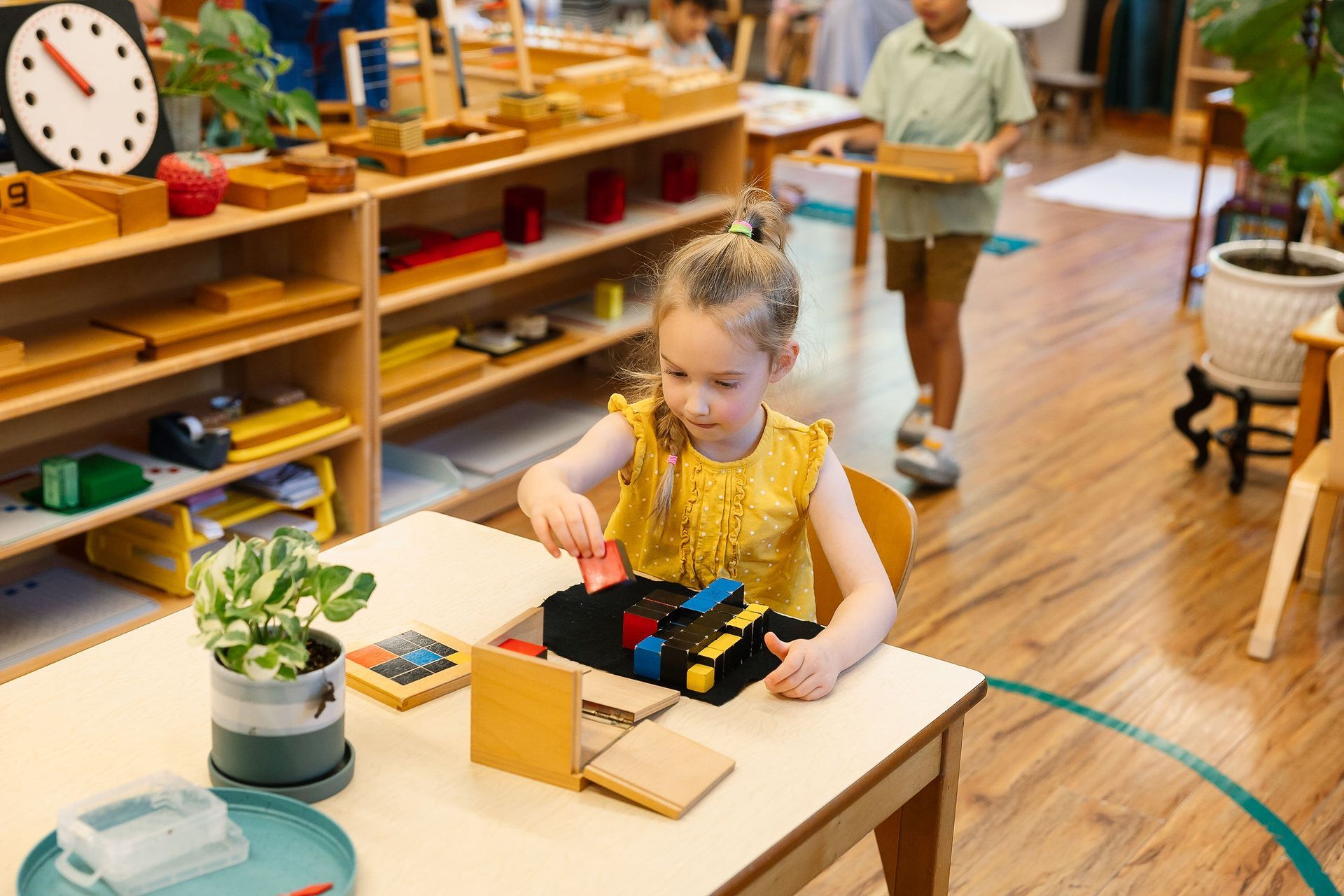
In our Primary classrooms, learning math is entirely individualized. Children work with beautifully designed, concrete materials like the Number Rods and Golden Beads. They progress through concepts at their own unique pace, completely free from the pressures of group lessons or societal expectations.
Our daily experience at Northwood mirrors the scientific data. Children are simply children. When given the freedom to explore mathematical concepts hands-on, every child can develop a deep, joyful understanding of numbers based on their personal readiness, not their gender.
Re-evaluating the Idea of Summer Learning Loss
For decades, families and educators have worried about the concept of the summer slide, a theory from older studies suggesting that children lose significant academic skills if they spend their summer months playing instead of studying.
Recently, researchers attempted to replicate those older studies using modern, more accurate data analysis tools. They found that the classic summer slide narrative is largely inaccurate. With very few exceptions, young children tend to plateau or even make developmental gains during their weeks away from formal instruction.
We find this research incredibly reassuring for our families. Every August, parents naturally wonder if the relaxed rhythm of the summer months has set their child back. This data reminds us that the child's mind does not simply turn off when they leave the classroom.
During the summer, children are still absorbing their world, engaging in rich conversations with family, practicing physical coordination, and exploring nature. A temporary pause in classroom instruction is not a loss. It is a natural period of consolidation that prepares the child to return to the environment with renewed energy and curiosity.
Deepen Your Reading: If you are interested in exploring the vast body of research that supports our daily work, we highly recommend Montessori: The Science Behind the Genius by Dr. Angeline Stoll Lillard. It is a wonderful look at the intersection of modern psychology and the prepared environment.
We are consistently inspired by the way modern science continues to highlight the wisdom of the Montessori method. We look forward to sharing more insights with our community as new research emerges.
You might also like