Freedom and Independence: The Architecture of a Montessori Classroom
In order to be truly free, we must be able to make our own choices, which means having the actual skills and abilities to act upon those decisions. Without independence, true freedom is out of reach.
As a child's independence grows, so does their opportunity for freedom. They have more choices available and more to consider. The freedom children experience in our prepared learning environments is directly related to their level of independence. Over multiple years in their classrooms, older children feel like true masters of their environment, while our younger children look up to them with a sense of wonder.
Since 1975, Northwood Montessori School has cultivated environments where freedom and independence coexist beautifully. In our Toddler and Primary classrooms, we ensure that specific opportunities are consistently present to support this vital development.
The Freedom to Choose Their Own Activity
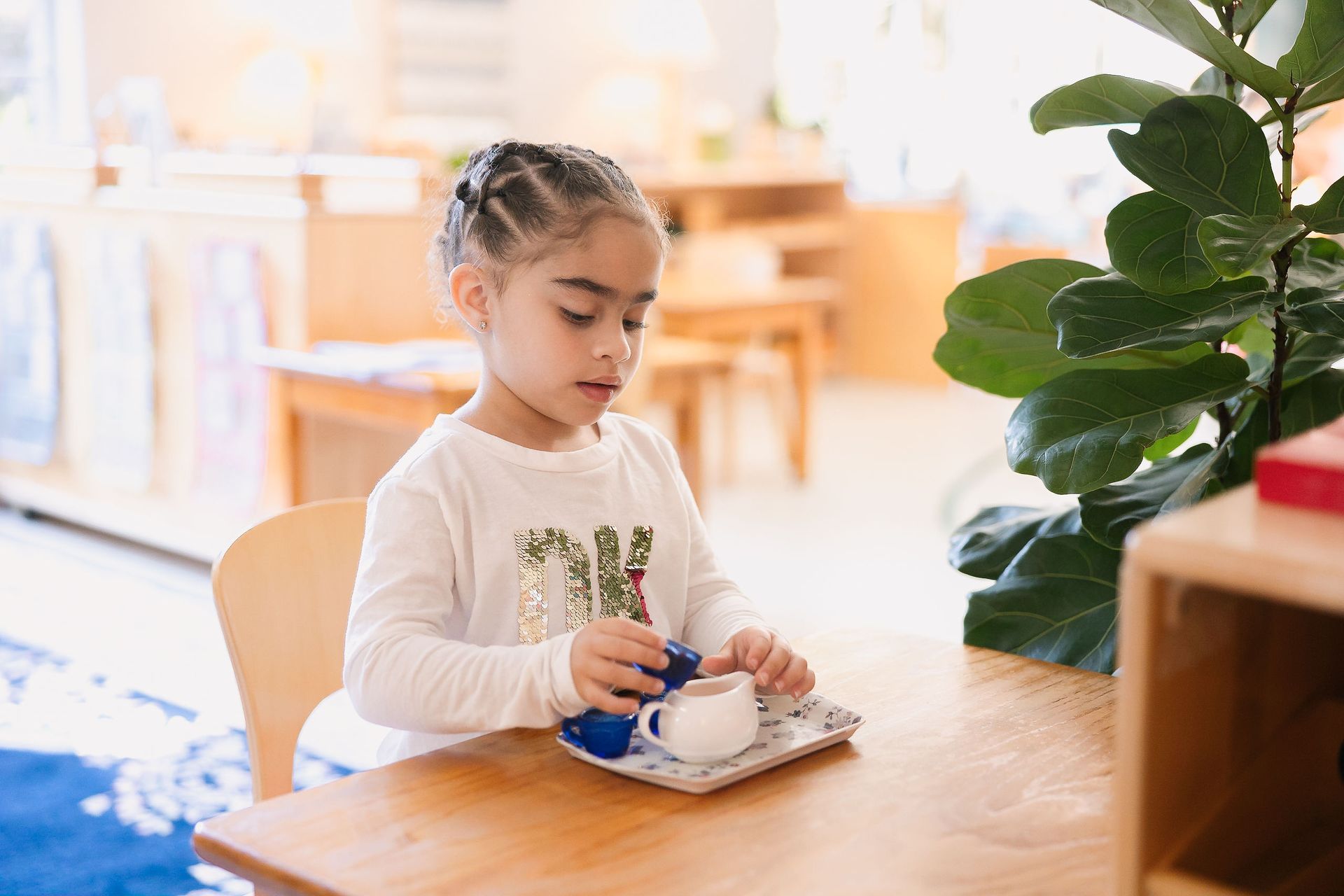
Even at a very young age, children have clear ideas of what they want and do not want to do. This decision-making capacity only strengthens when children have regular opportunities to practice it. In our Montessori classrooms, we provide opportunities to make choices, but it is never a free-for-all.
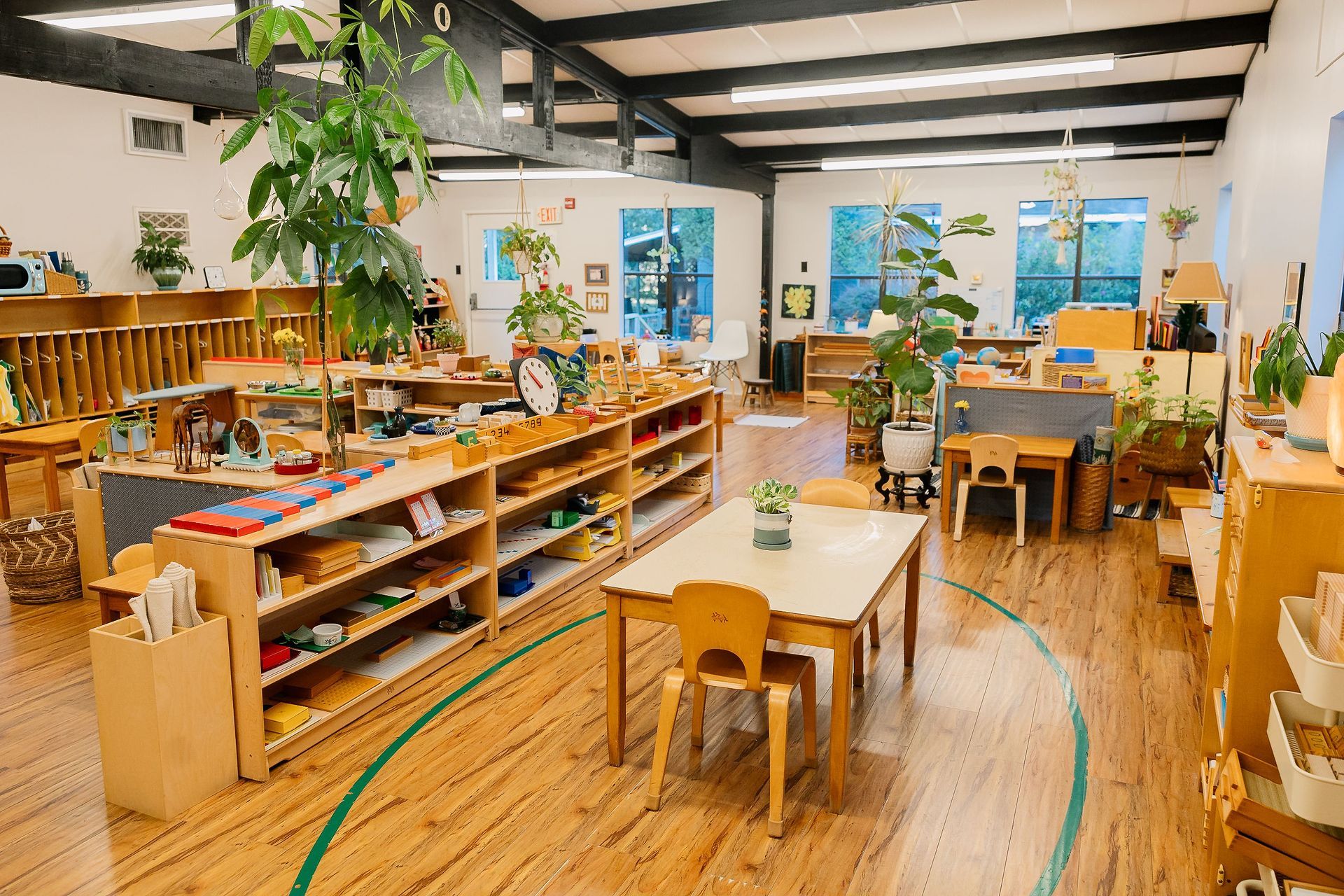
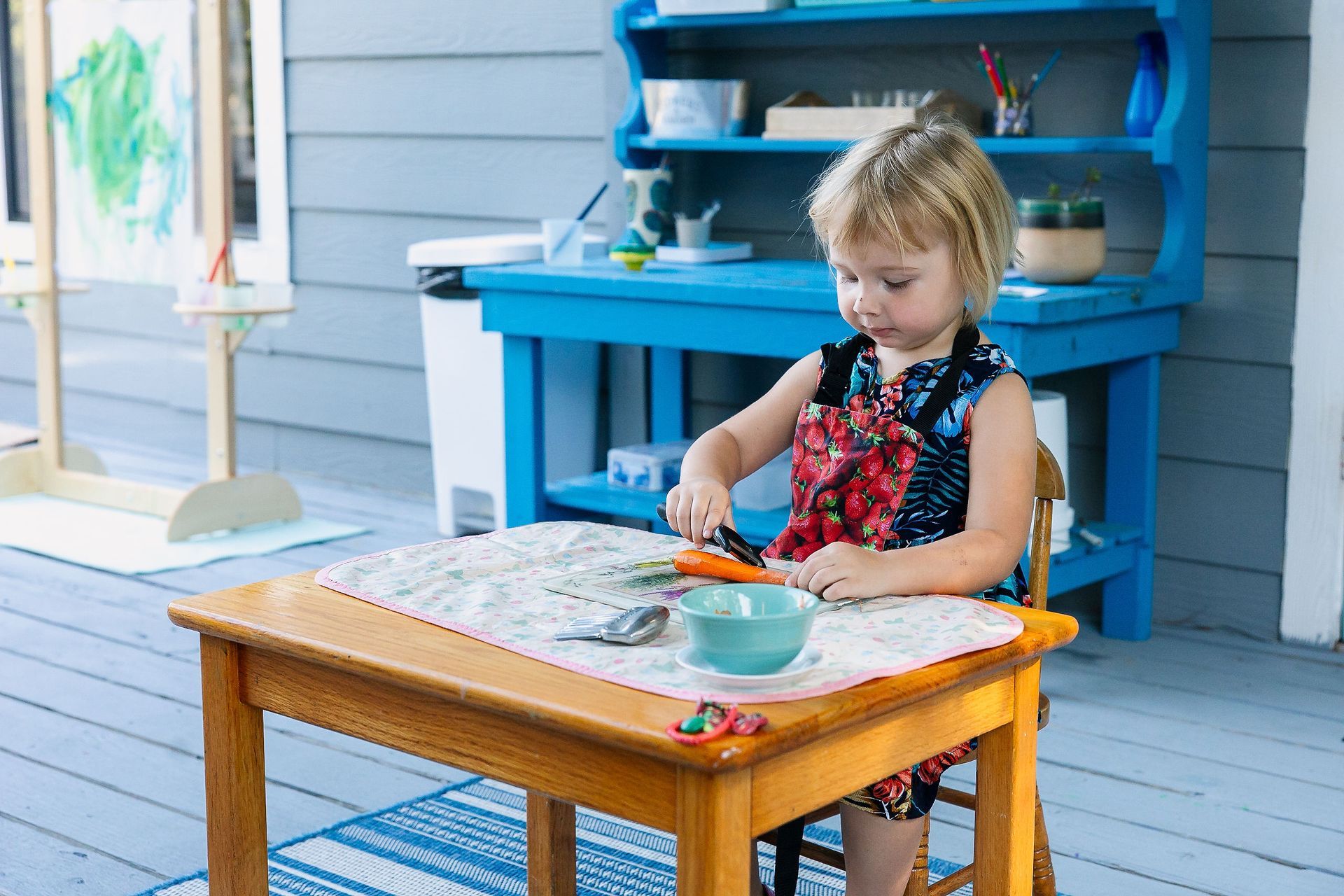
The classroom is set up with a variety of sequential activities designed to meet specific developmental needs. Children are free to choose any material they have been shown by a Guide, or that they have the developmental capability to do.
To build this ability to make a choice, we start by offering our youngest children choices about very simple things. When an activity has two parts, a Guide might ask, "Would you like to carry the box or the tray?" Then we give another opportunity for choice, "You may carry the tray to any table that you choose."
Over time, children develop the ability to make increasingly more complex choices, building the precise skills that allow them more options in their learning environment.
The Freedom to Work Without Interruption
Once a child chooses an activity, they are free to engage with it for as long as they like without anyone else, adult or child, interfering with their work. In this way, we actively protect the child's focus and deep concentration. As a wonderful benefit, because authentic AMI Montessori materials are self-correcting, children do not need to look to an adult for validation.
The Guides and assistants at Northwood work diligently to protect children who are actively engaged in purposeful activity from interruption. This remains true even if it is a three-year-old washing a table and water is beginning to pool near the edge. If children are constantly interrupted, their concentration becomes fractured, which can result in a reluctance to take risks or engage with challenging learning material in the future.
The experience of being interrupted happens frequently to young children in the outside world. They try to start doing something, and well-meaning adults step in to stop them or finish it for them. Yet, children must be able to dive deeply into an activity in order to develop stamina, concentration, and focus.
The Freedom to Move Freely
Children in our environments are free to move about the classroom. Rather than having an assigned desk or a designated workspace, they can choose where they want to work and with whom they want to work.
They have the liberty to get up and move, get a drink of water when thirsty, or go to the bathroom when needed without asking for permission. If there is a group gathering in the classroom, children are even free to choose whether or not they want to participate, allowing them to honor their own internal learning rhythms.
The Freedom to Communicate With Others
Children also have the freedom to communicate. They can speak to whomever they want and when they want, provided their conversation does not disturb their own work or the work of others.
This freedom is a gift to young children, who are often asked to be quiet or wait their turn to speak in traditional settings. Children in our learning environments have the freedom to speak and the true ability to be heard. The adults in the classroom make it a priority to listen with deep respect whenever a child wants to communicate something.
The Freedom to Work at Their Own Pace
Unlike traditional early childhood environments where children move together along a strict, collective schedule, Montessori children have the freedom to work at their own pace. To facilitate this, our daily schedule is specifically designed around large blocks of uninterrupted time, known as the work cycle.
Working with the learning materials is how children develop themselves. They need time to reflect and integrate what they are absorbing. Therefore, children also need to be able to repeat an action as often and as long as they would like to do so. When children are new to our classrooms, we sometimes remind them of this opportunity by saying, "You can do this for as long as you like today."
The Role of Compassionate Limits
In order to support this foundation of freedom, our Montessori classrooms have a few basic, logical limits that protect the community.
In addition to ensuring that children are not distracted or interrupted in their work, we help children learn that materials can only be taken off the shelf by one person at a time and must be returned to their proper place. This structure provides a clear social signal. When a material is on the shelf, it is available for use. When the material is not on the shelf, it is being enjoyed by a peer, and we must wait or choose something else.
Children are also an active part of restoring materials so that they are ready for the next person. In the process of making the activity beautiful for their classmate, children learn how to replace wet towels with dry ones, how to dry drips of water off a tray, or how to replenish any paper or thread that was consumed. When the materials are fully restored and returned to the shelf, the next child can access them completely independently.
A Natural Progression
As children gain skills and physical abilities, their independence increases and their universe of choices expands. Activities are kept complete and ready for use so that children are never dependent upon an adult to retrieve items for them.
The lessons we offer are designed to provide just enough information for children to continue the activity successfully on their own. We offer these liberties in perfect harmony with each child's developing skills, abilities, and level of responsibility, allowing them to experience the true joy of a self-directed life.
If you are curious about how this balance of freedom and limits functions in real time, we invite you to
schedule a campus tour to see our classrooms in action.
You might also like