Preparing for the Rhythm of a New School Year
It is that time of the year again. Over the course of the Houston summer, even with the best of intentions, some of our daily routines tend to dissolve to give way to relaxation and family adventures. This relaxation is a beautiful, necessary part of the year.
The start of the school year is approaching, however. Now is the perfect time to consider how your family can prepare for a smooth transition back to our campus.
Whether your child is stepping into a Montessori environment for the very first time or returning to their familiar community, a thoughtful transition makes a significant difference. Here are a few grounded, practical tips to help the start of the school year feel welcoming and manageable for everyone.
Prioritizing Consistent Sleep
Sleep is perhaps the most critical element to consider. A child's sleep schedule directly impacts their ability to focus, engage deeply with classroom materials, and navigate their emotions. We encourage families to focus on three elements: the amount of sleep, the timing, and the quality of the rest.
According to the American Academy of Pediatrics, these are the general sleep recommendations within a 24 hour period, including naps, for the developmental stages we serve at Northwood:
- 1 to 2 Years (Toddler): 11 to 14 Hours
- 3 to 5 Years (Primary): 10 to 13 Hours
Once you consider what amount works best for your child, figuring out bedtime is a matter of counting backward. Be sure to factor in the time you need to leave the house and how much space your child needs to get ready without feeling rushed.
If your child's current summer bedtime is far from where it needs to be, take the transition slowly. Start by shifting their bedtime 15 minutes earlier every few days until you reach your goal.
To improve the quality of their rest, focus on creating a calm environment. A dark, cool room works best. Establishing a predictable, soothing evening sequence will help them drift off to sleep easily. Keep the routine the same each night, whether that includes a warm bath, sharing a book together, or a quiet moment of reflection.
Establishing Home Rhythms
In a Montessori environment, order and predictability help children feel secure and capable. The same principle applies at home. When young children know what to expect, they are much better equipped to handle the day ahead.
Every family dynamic is unique, but we encourage you to protect a predictable morning rhythm. To guide your planning, consider these questions:
- What time do you need to leave the house to arrive comfortably for morning drop-off?
- What tasks can be completed the night before to alleviate the morning rush?
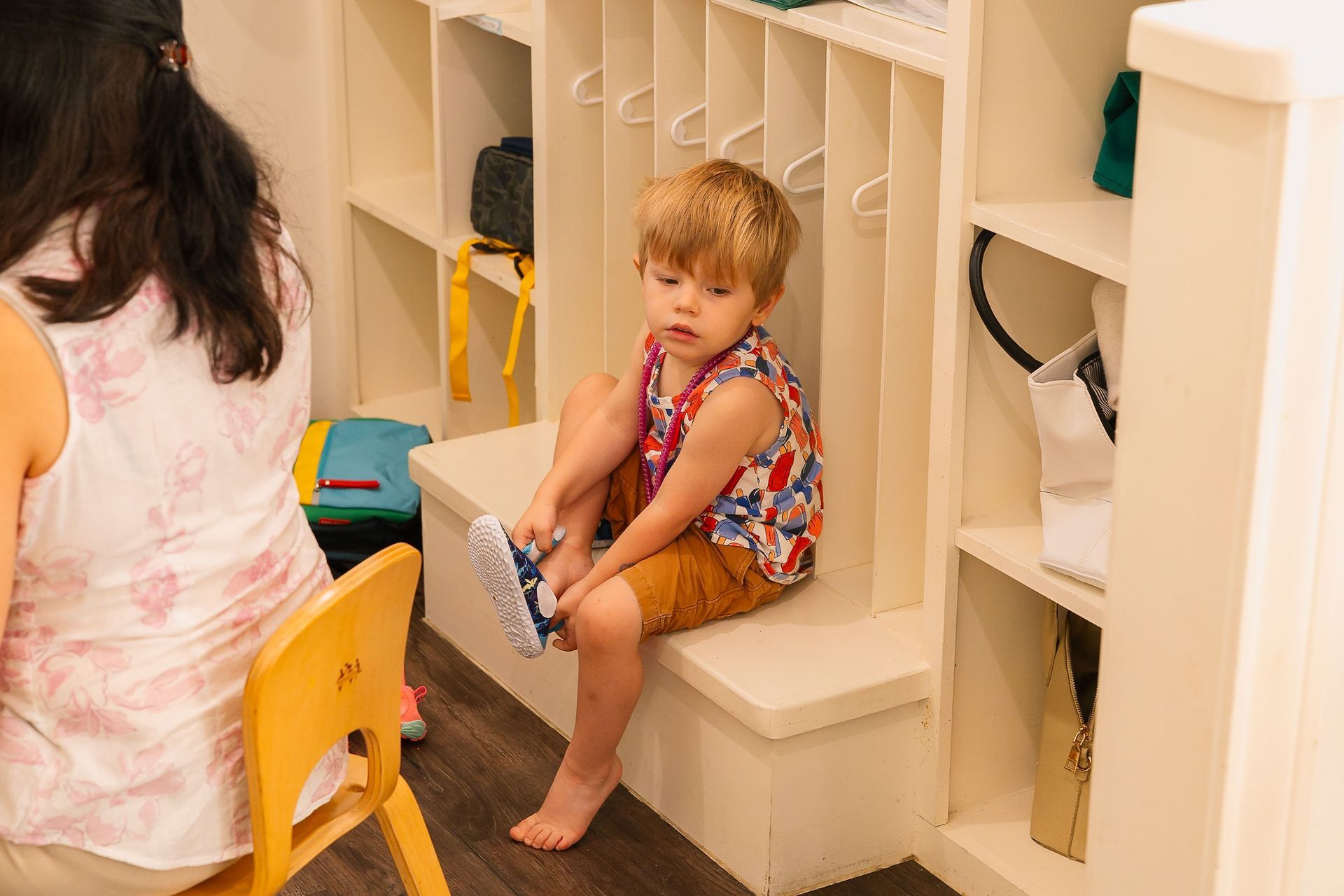
- What parts of the routine can your child do independently, such as putting on their shoes or choosing between two pre-selected outfits?
A similar concept applies to the evening. Consistent, repetitive steps at the end of the day signal to the child's body and mind that it is time to rest. As the weeks pass, these routines become second nature, reducing friction for the whole family.
Navigating Big Emotions
It is entirely normal for toddlers and young children to experience big emotions as the first day of school approaches. They may feel a mixture of excitement, anticipation, or apprehension about being apart from you.
When a child is distraught, it can be deeply challenging for parents. Our natural instinct is often to minimize their concerns or quickly distract them. The most supportive action we can take, however, is to acknowledge and validate their feelings.
For young children, helping them name their emotions is incredibly powerful. You might say, "I see that you feel unsure about saying goodbye, and that is okay. I will always come back to pick you up." Let them know that their feelings are a normal part of growing up and changing routines.
Parents often experience a wide range of emotions during this transition, too. You may feel a mix of hesitation, pride, or nostalgia as your child steps into their Toddler or Primary environment. Recognizing your own feelings allows you to model calm, confident leadership, which provides an immense sense of security for your child.
Embracing Flexible Expectations
Even with careful planning, life with young children rarely goes exactly as intended. Perhaps the first day of school arrives and bedtime is still a struggle, or perhaps the morning drop-off feels heavier than you anticipated.
We encourage you to give your family grace. The first few weeks of the school year are a period of adjustment for everyone. Our guides and staff are fully prepared to support your child through the tears, the triumphs, and everything in between. We are honored to partner with your family, and we cannot wait to welcome the children back to Northwood.
You might also like