Language matters
Toilet learning is one of the most significant milestones in early childhood. At Northwood Montessori School, our approach to toddler toileting is grounded in AMI Montessori pedagogy, respecting the child’s developmental readiness, dignity, and growing independence.
Families searching for Montessori toddler programs in Northwood, toilet training the Montessori way, or AMI Montessori toileting often discover that Montessori views this process not as “training,” but as a natural progression toward self-care and autonomy.
Montessori Uses the Term “Toileting,” Not “Toilet Training”
In authentic Montessori environments, we intentionally use the word toileting rather than toilet training. Training implies an adult-driven process imposed on the child. Montessori toileting, by contrast, is child-centered, respectful, and based on observation.
Maria Montessori emphasized that independence is a fundamental human drive:
“Any help which is given when it is not necessary is an obstacle to development.”
- Maria Montessori
Toileting is one of the earliest expressions of this drive toward independence.
When Does Toileting Begin in Montessori?
From an AMI Montessori perspective, toileting does not begin at a single moment, it begins from birth, through:
- Freedom of movement
- Awareness of the body
- Respectful caregiving
- Opportunities for participation in self-care
Most children show readiness for toileting between 15 months and 3 years; depending on the child, not a predetermined age.
Key developmental signs include:
- Awareness of bodily functions
- Increased control of movement
- Desire to participate in self-care
- Ability to communicate needs verbally or nonverbally
- Interest in independence
The Role of the Prepared Environment
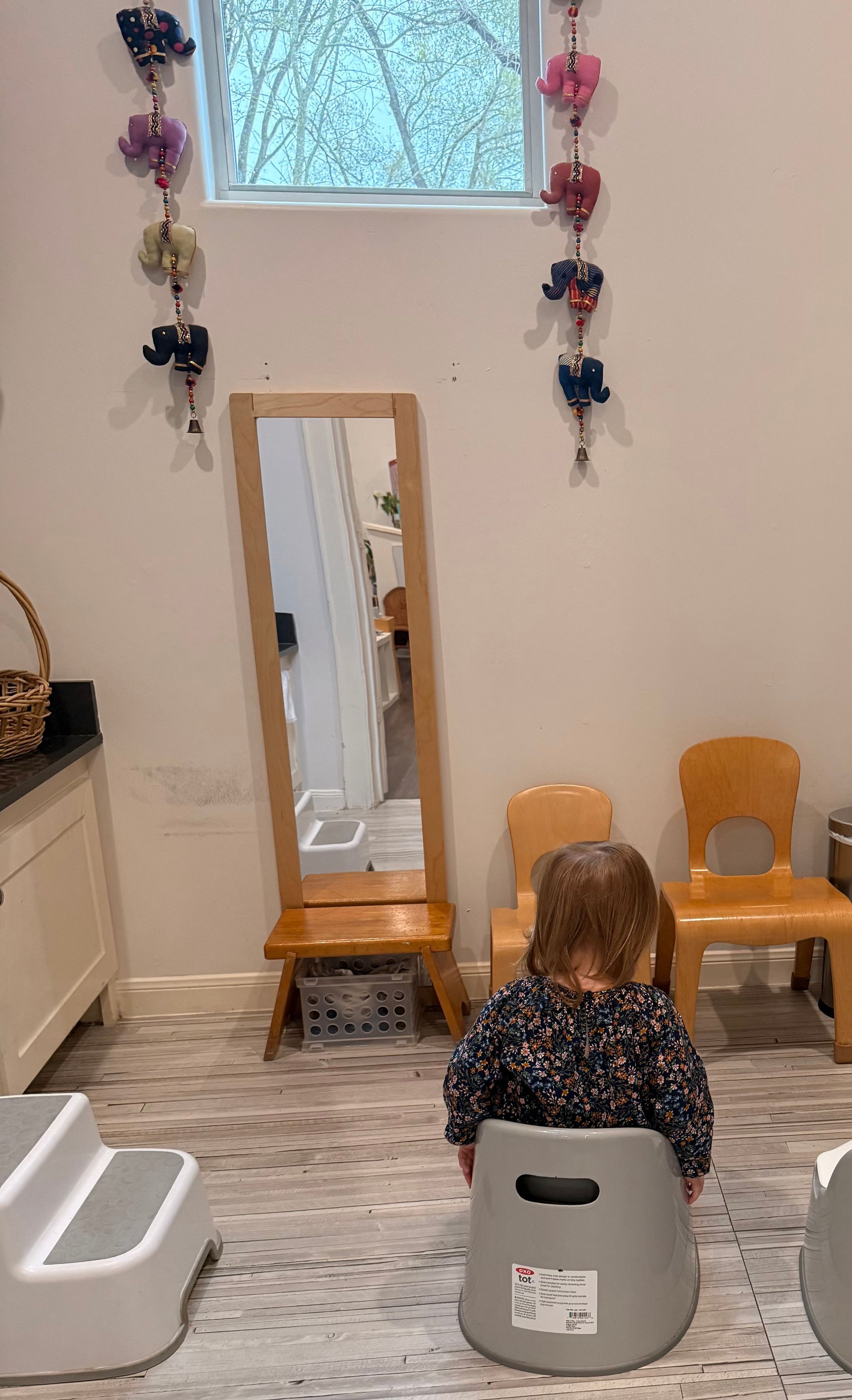
The prepared environment is essential to successful Montessori toileting. In a toddler Montessori classroom, the environment is designed so the child can participate independently.
This includes:
- Child-sized toilets or toilets with stable foot support
- Low sinks and mirrors
- Accessible clothing (elastic waistbands)
- Consistent routines
- Calm, respectful adult guidance
At Northwood Montessori School, the environment supports toileting as a normal, everyday part of life, not a pressured event.
The Montessori Toileting Process
1. Observation Comes First
Montessori guides carefully observe each child to understand readiness and patterns. No child is rushed or compared to others.
2. Consistency and Predictability
Children are offered regular opportunities to use the toilet, especially during natural transitions, without pressure or rewards.
3. Participation, Not Perfection
Children are encouraged to:
- Walk to the bathroom
- Manage clothing with assistance as needed
- Sit calmly on the toilet
- Wash and dry hands
Accidents are treated as neutral information, not failures.
4. Respect for the Child
Language is calm and factual. Adults model confidence and trust in the child’s abilities.
Frequently Asked Parent Questions About Montessori Toileting
Is Montessori toileting child-led or adult-led?
Montessori toileting is child-centered and adult-supported. Adults prepare the environment and offer opportunities; the child leads the process.
What if my child has accidents?
Accidents are expected and respected as part of learning. They provide feedback to the child and information to the adult. There is no punishment, shame, or reward system in AMI Montessori environments.
Does Montessori use rewards or sticker charts?
No. External rewards undermine intrinsic motivation. Montessori supports internal satisfaction and self-mastery, which leads to lasting independence.
Can my child toilet at school but not at home (or vice versa)?
Yes, and this is common. Consistency between home and school helps, but development is not linear. Montessori guides partner with families to support continuity.
What if my child is not ready yet?
Readiness varies. Forcing toileting before the child is developmentally prepared can create stress and resistance. Montessori respects the child’s timeline.
Why does Montessori emphasize independence so strongly in toileting?
Toileting supports:
- Body awareness
- Executive function
- Confidence
- Self-respect
- Trust in one’s abilities
These qualities extend far beyond the bathroom.
Why Montessori Toileting Supports Long-Term Development
From an AMI Montessori perspective, toileting is not an isolated skill. It is deeply connected to:
- Control of movement
- Order
- Concentration
- Emotional regulation
- Independence
When toileting is approached with respect and patience, children develop a healthy relationship with their bodies and their capabilities.
Toddler Toileting at Northwood Montessori School
At Northwood Montessori School, we:
- Follow AMI Montessori principles
- Respect each child’s developmental readiness
- Prepare environments that foster independence
- Partner closely with families
- Maintain dignity and consistency throughout the process
Families looking for a Montessori toddler program in Northwood often appreciate our calm, thoughtful approach to toileting—one that supports the whole child.
A Foundation for Independence
Toileting is one of the first ways a child says, “I can do it myself.” When supported properly, this moment becomes a foundation for confidence and self-trust that lasts a lifetime.
At Northwood Montessori School, we honor this important step with respect, patience, and authentic Montessori pedagogy.
You might also like